

Our "shaking, touching, heart-touching"
Become a nurse who continues to challenge herself, improves herself, and "faces the world."
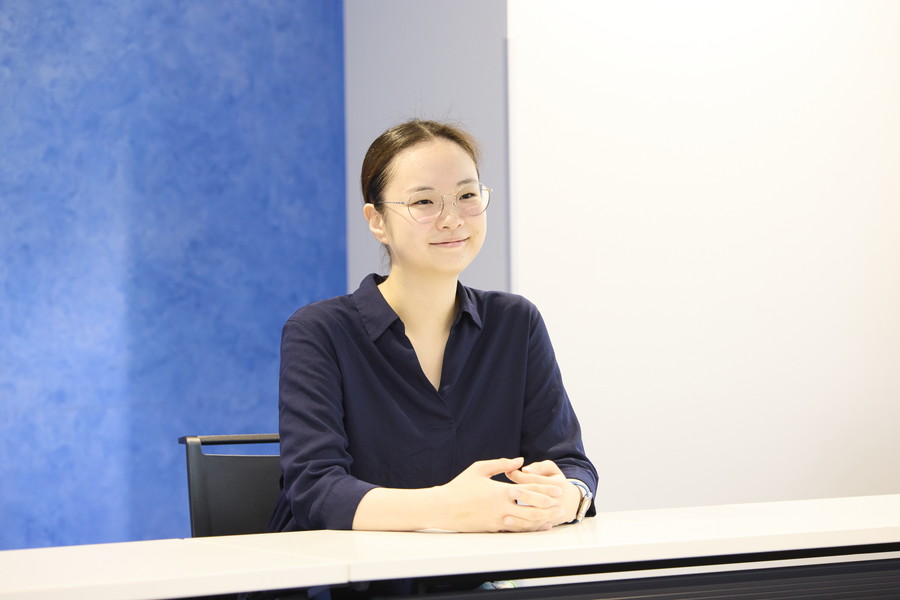
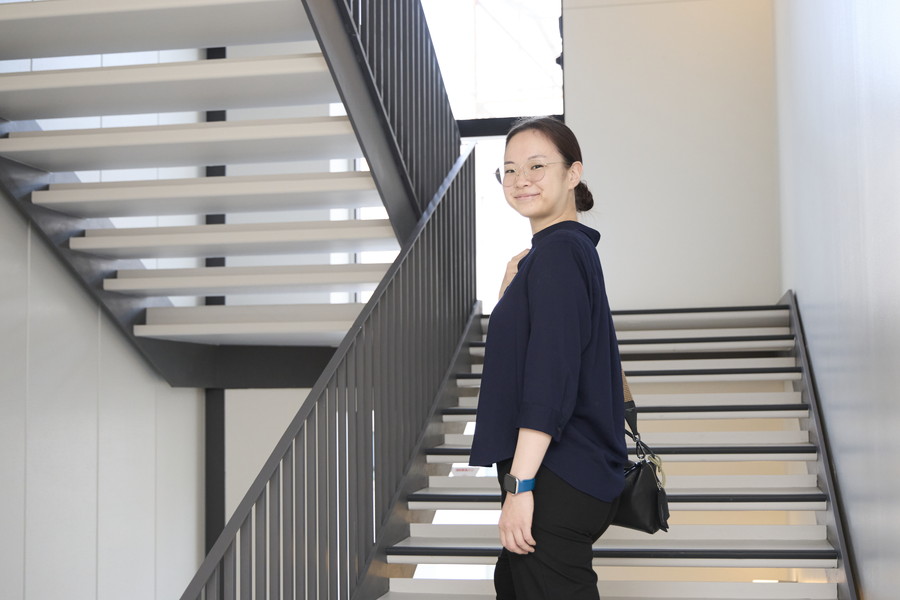
Rio Fukuda
Branch Health Clinic Atsugi Nurse
As a member of the first graduating class Faculty of Global Nursing, I helped create a learning environment that transcends national borders.
I've had a dream of becoming a nurse since I was in middle school. The reasons are that I wanted to acquire a marketable skill and live independently.
When choosing a university, I attended an open campus event at Otemae University. There, I was deeply moved by the words of a professor who said, "We want to cultivate nurses who don't give up easily and produce nurses who are global citizens," and "Even just knowing a language other than Japanese can broaden your world." Since I had loved English since high school, I felt that studying here would broaden my horizons, so I decided to enroll.
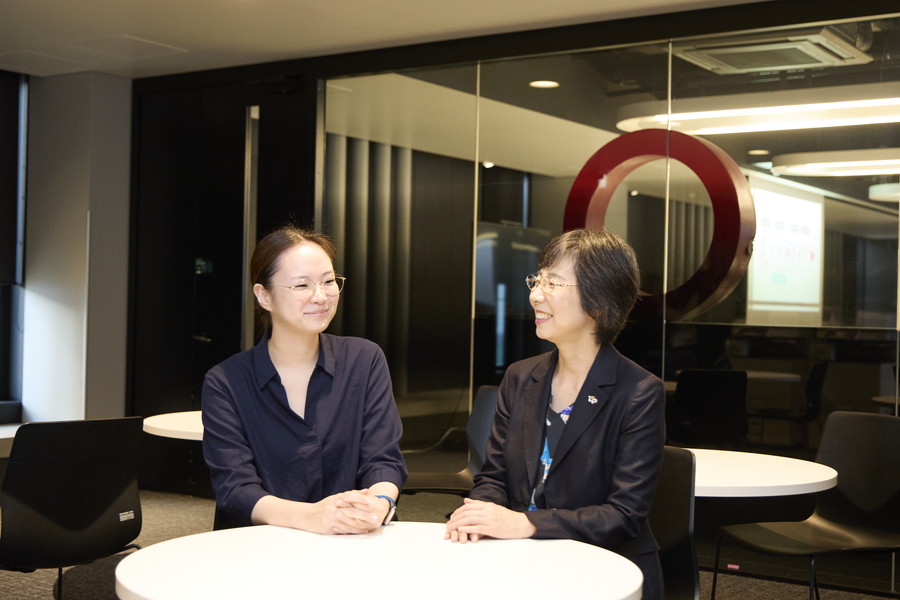
What I remember most vividly from my university days was being involved in organizing international exchange events. As a member of the first graduating class of Faculty of Global Nursing, I started from scratch, but with the support of my classmates, juniors, and professors, I was able to organize two events. We planned an event to exchange with nursing students from overseas, such as South Korea, Taiwan, and Thailand, with whom our university has agreements. Due to the COVID-19 pandemic, it was held online, but about one person from each university gave a presentation on nursing and medical topics, and we also shared information on how to conduct clinical training. For example, there was a presentation by a South Korean student on the reality of cosmetic surgery, and there was a lot of information that is rarely heard in Japan, which was very stimulating.
In my first year, the professor asked me, "I'd like to try something like this, would anyone like to give it a go?" and I readily raised my hand. The second time, I volunteered to participate again, saying, "I definitely want to do it again this year." When the professor's and students' ideas and themes differed, I would listen to why they considered certain content important and think about how we, as students, could adjust our approach. Acting as a mediator and negotiating between the two parties is a cherished memory.
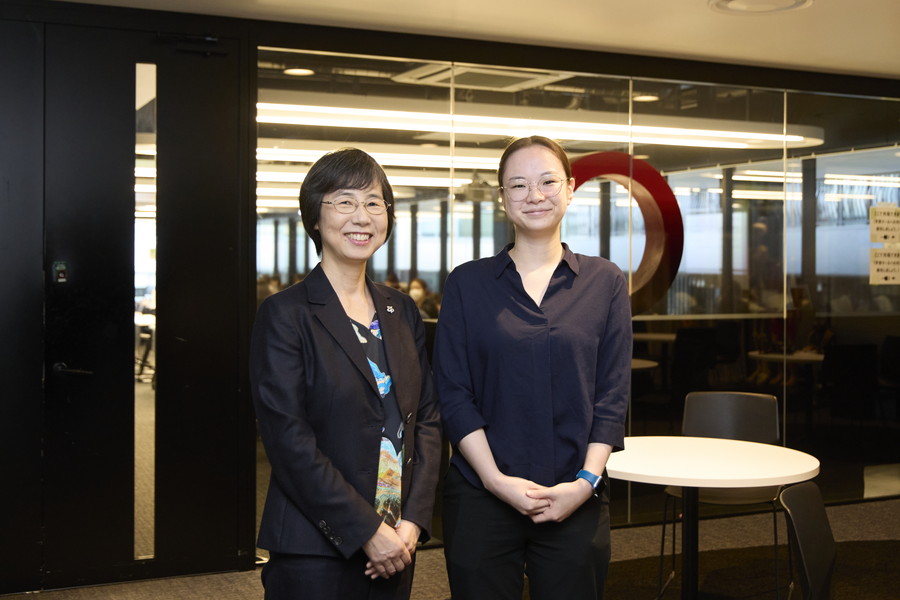
From acute care medicine to working at a U.S. military base, the university education that supported this challenge.
After graduation, I got a job at an acute care hospital in Kanagawa Prefecture and worked in the CCU (Cardiac Care Unit) for two years. While researching hospitals across the country, I was attracted to this hospital because it boasts one of the highest numbers of surgeries in Japan, which was my reason for applying. In reality, I found the work extremely busy, and I was constantly busy studying to keep up with my duties. On the other hand, I began to question whether I was truly challenging myself to learn what I wanted to learn, and I started to consider changing jobs.
When I considered taking on a new challenge, I wanted to acquire some kind of "extra" skill in addition to my experience as a nurse. I believe that the learning I received at Faculty of Global Nursing and the influence of my professors played a significant role in this. I also had a dream of working as a nurse in the United States someday, and it was in this context that I came across "Branch Health Clinic Atsugi" at Atsugi Air Base, where I currently work.
Working in the United States presents various challenges, such as language proficiency and visa issues, but here, you can work using English while living and working in Japanese. I joined the company in 2025 because I felt I could confidently take on this challenge in an environment that is, in a sense, "America in Japan."
Our clinic is operated by the U.S. military, and we also have medical facilities at U.S. military bases in Japan, including Yokosuka, as well as in Asia. We provide primary care to active-duty military personnel and their families, as well as some retired military personnel and their families. Our work primarily involves desk work, such as responding to patient messages and adjusting medication prescriptions.
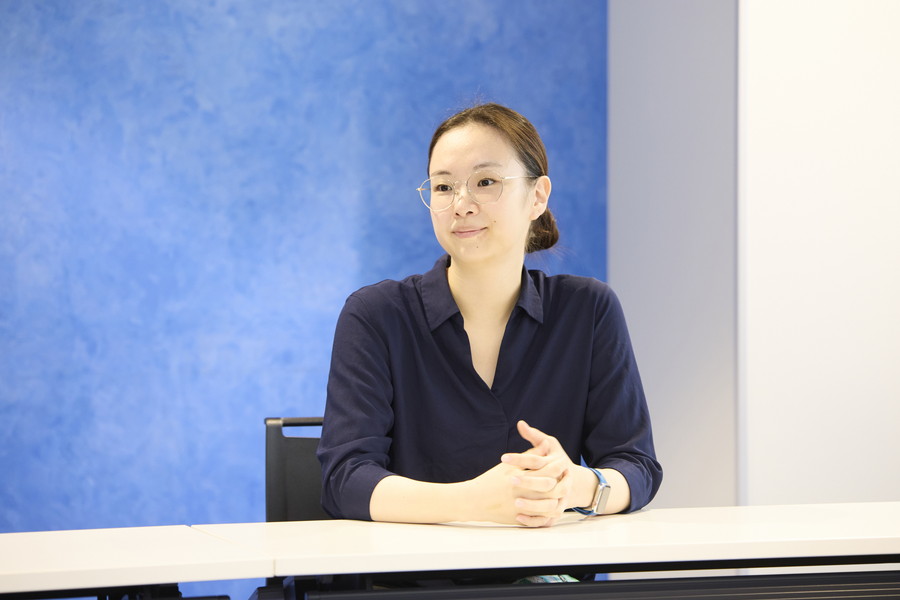
Communication skills honed in a multi-professional, multinational work environment.
Our workplace employs nurses, doctors, medics, and many other staff members, including those at the dental clinic located on the same premises. We also handle obstetrics and gynecology, and I feel that the multifaceted perspectives I gained during my university days are supporting me now as I work collaboratively with other Japanese nurses as part of a multidisciplinary, multinational team providing medical care.
Nurses are sometimes called "angels in white," but the reality is far from easy. At university, our professors taught us about these realities. In addition to classes that emphasized practical skills useful in the field, such as those for the national exam, we also had the opportunity to go to quarantine stations for clinical training. Some of my classmates did internships at prisons and NPO facilities, and I feel that the valuable experiences we gained that we wouldn't have been able to get just by working in a hospital are unique to this university.
Furthermore, learning from teachers with diverse backgrounds was a great source of inspiration. I had many opportunities to engage with English from my first year, and through group discussions and other activities, I learned the importance of expressing my own opinions.
As a result, I feel that I no longer panic unnecessarily when faced with differences in culture and way of thinking, not only in patient care but also in communication with colleagues. I've come to believe that it's natural for opinions to differ, and that it's important to communicate our intentions in some way, regardless of nationality or language. Especially in my current work environment with military personnel, it's necessary to devise communication strategies tailored to the person I'm dealing with, and the real-world examples I learned during my studies and the words of my professors are a source of daily support.
In my work, there are times when I'm overwhelmed by the other person's enthusiasm and can't keep up with the conversation. Even so, I've made it a point to persevere, ask for clarification multiple times, and maintain a commitment to being a part of the team. I'm also always mindful of ensuring that my communication as a second language speaker of English doesn't disadvantage patients, taking both their physical and mental needs into consideration. I feel that I've become able to think about things from both the perspective of a nurse and as a person.
A future career as a "never-give-up nurse"
Looking back, if I hadn't studied at this university, I might not have chosen to work in a critical care unit like the CCU as a new graduate, nor would I have considered trying my hand at being a nurse on a U.S. military base. I feel that the driving force that allowed me to find the kind of nursing I truly wanted to do, even while facing difficulties, was the four years I spent at university.
While there were aspects where I took a leap of faith due to my youth, the feeling that "I've learned so much at Otemae, so I'm sure I can manage somehow" became my guiding principle, and that's what has allowed me to come this far.
My attitude of "trying anything first" was cultivated at this university, which aims to produce "nurses who never give up." In my current workplace, there are many people from professions other than nursing, and each of them has different skills and values. While realizing the importance of teaching, learning, and sharing with each other, I have come to want to get involved in "education," which I have been interested in for a long time. In the future, I would like to contribute to improving the quality of medical care by improving the overall technical capabilities of the team by passing on my own knowledge and skills.
My immediate goals are to pursue a US nursing license and to work in high-care units such as ICUs. Furthermore, I want to gain experience working in environments that may not necessarily be comfortable for me, such as US military bases and overseas locations. I want to continue taking on challenges that I feel might be a little difficult, and feel myself growing as a result. In the future, I would like to explore my career options, including the possibility of working at other US military bases that have ICUs.
*All information is based on interviews conducted at the time. (March 2026)