

Research activities
Close-up
What nursing can do to help patients and their families live happier lives
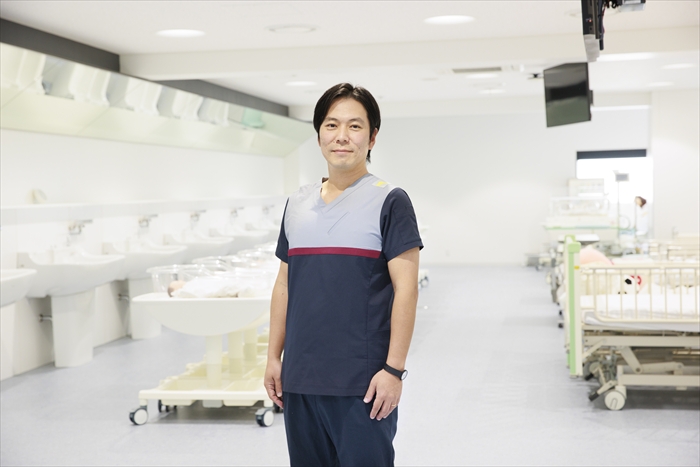
Faculty of Global Nursing
Satoshi Takaya Associate Professor
Research topic: Family concordance Autism spectrum disorder Respite Care Nursing Education Digital Systematic review
Nurses are able to support patients and their families in improving their quality of life.
My research theme, "Family Concordance," focuses on the process by which the entire family, including the patient, respects and cooperates (concordance) with various health, medical, and welfare professionals on an equal footing, and makes informed choices about treatment and lifestyle. The origins of this theme lie in my experiences with children and their families that I encountered in clinical settings as a pediatric nurse. I believe that nurses are professionals who not only cure illnesses, but also can help improve the quality of life (QOL) of patients and their families, and that this is what makes their work so rewarding.
During my student days, during my internship in the pediatric ward, I encountered "A-chan," a child with terminal cancer (the stage where death was imminent), and I learned that "paying attention" itself has great meaning for patients and their families. By paying attention not only to the patient's condition and treatment, but also to how the family feels about their daily lives, it gives the family an opportunity to think about "what kind of family they want to be." This experience left a strong impression on me of the importance of caring for the whole family, not just the child.
Also, after working as a nurse, I met "B-chan" in the pediatric ward. B-chan was born with a serious heart condition, and her approach to life changed dramatically after she received discharge guidance from a nurse. As she lived with her illness, I witnessed firsthand how the patient and her family began to focus on what they could do rather than what they couldn't, and how this change led to an improvement in their quality of life. This experience taught me that nursing has the power to change the awareness of patients and their families, and to positively transform their lives.
These experiences of nursing children and their families in clinical practice after becoming a nurse from Global Nursing me to want to investigate through research how we can support "family concordance - a state in which children and families share their feelings with each other, discuss on an equal footing with various professionals, and live a convincing recuperation lifestyle." Currently, I am working on research targeting children and their families with chronic illnesses to clarify the impact that relationships within families, gaps in perceptions between family members, and relationships between families and various professionals have on the family's quality of life. Through this research, born from my practice in pediatric nursing, I hope to spread the message to society that nurses are professionals who are able to support children and families in their lives and build a better future together.
Getting to know patients and their families is the first step in respecting family diversity
What has become clear through my clinical experience and research as a nurse is that the families who support their children are also living their daily lives with deep anguish. In the field of pediatric care, families are often seen as "supporters" or "cooperators," but in reality, they are also "parties in need of care" who are filled with anxiety, uncertainty, and conflict. I believe that the true strength of family nursing lies in focusing on this very point.
As I continued my research, I came to strongly feel that "family guidance" and "family nursing" are similar but not the same. Family guidance tends to be a one-way interaction in which medical professionals convey their values and correct answers. This prevents harmony and cooperation between the two (family concordance). On the other hand, family nursing does not impose its "ideal" approach, but rather requires an attitude of understanding the thoughts, values, and backgrounds of each family member and being attuned to their own answers. Research also suggests that psychological care should take priority over the provision of knowledge and skills.
In the interview survey I conducted, many family members said, "Our feelings were put on the back burner," and "We thought we were not the kind of people who should complain." However, when nurses pay attention to the family, listen to them (x listening), and demonstrate through their attitude that "you are important to us too," the family's feelings change dramatically. Families who feel understood are gradually able to speak their true feelings, which fosters a relationship of trust with medical professionals and leads to the establishment of a supportive relationship.
Furthermore, families have a wide variety of values and ways of thinking, and there is no single correct answer. Through this research, we have also seen the importance of nurses themselves questioning their own "common sense" and "the support they believe is best." It is important to first understand one's own "view of family," such as "What do I think family is? What do I want/what is expected of my family?" It is not easy not to impose one's values, but this attitude is the first step in respecting the diversity of families.
Caring for families not as "people who need support" but as "people living with worries." I believe that by adopting this perspective, nursing can become deeper and warmer. I would like to apply these realizations I have gained through my research to education and clinical practice in the future, and expand the way nursing works together with families.
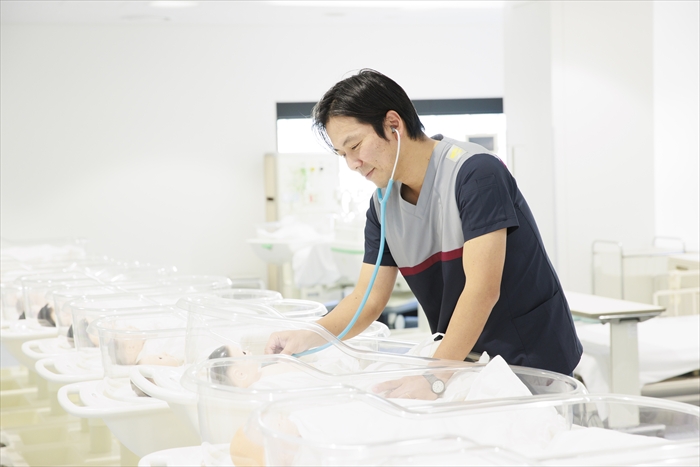
The future of nursing made possible by familiar diversity, "sensory diversity"
My new research theme, "Sensory Diversity," was born from a question I naturally arrived at while researching "Family Concordance." Its origins lie in a girl I met as a student, "A-chan." Through my relationship with A-chan, I began to think about the nature of families surrounding children, and I have always held in my mind in my clinical practice the questions, "How can we improve family function (the role that family members play in helping each other and adapting to society)?" and "What can nursing do to help children live happier lives?" I began to think that I wanted to pursue these questions as my own research theme.
Sensory diversity is a type of diversity familiar to humans, where people see, hear, and sense things differently even when they are in the same environment. Invisible differences such as low vision, hearing loss, and sensory hypersensitivity are often difficult to understand, leading to difficulties in life for the individual and their family. Therefore, we are currently engaged in research to recreate the world of people with low vision or hearing loss using virtual reality (VR) to provide a simulated experience. By experiencing this firsthand, medical professionals can become aware of their own preconceptions that "they think they can see" or "they should be able to hear," potentially leading to a deeper understanding of the patients. We hope that this will enable participants to acquire the communication skills and attitudes that respect diversity, which are necessary for nurses.
We are also developing an educational system that utilizes the concept of a digital hospital, allowing Global Nursing to interview virtual patients using artificial intelligence (AI). This system allows students to repeatedly interview patients in a safe virtual environment, improving their observation and communication skills. The virtual patients are designed to represent diverse populations, including those with diverse genders, nationalities, cultures, languages, illnesses, and family backgrounds. Students can deepen their understanding of these subjects by simulating interactions with people with diverse values and backgrounds, something that is difficult to learn from textbooks alone. This system has the potential to become a new learning platform for learning nursing practice that takes diversity into account before entering the clinical field, and is also expected to serve as a new approach to supporting family concordance.
By using AI and VR, Global Nursing and medical professionals can simulate various sensory worlds and rare cases before entering the clinical field. This allows for immersive and realistic learning regardless of location, allowing them to experience "rare worlds" that they have never experienced before. Understanding sensory diversity leads to thinking about a society that is comfortable for everyone, not just for a special someone. Aiming for a society where children can live happier lives, I believe that research into sensory diversity has the potential to advance our understanding of the subject of nursing and pave the way for a future in which nursing works alongside families.
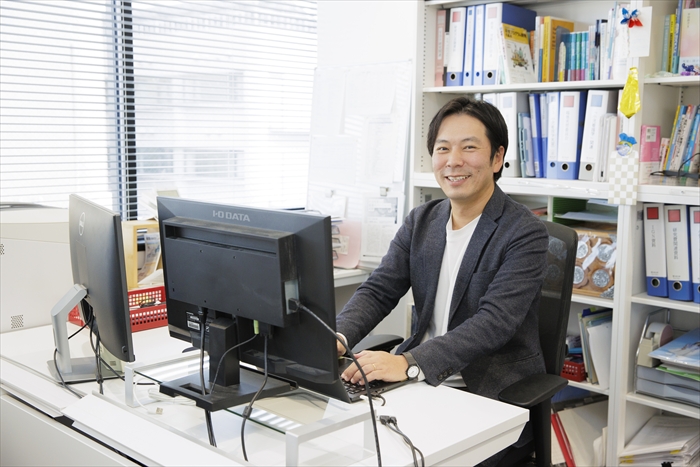
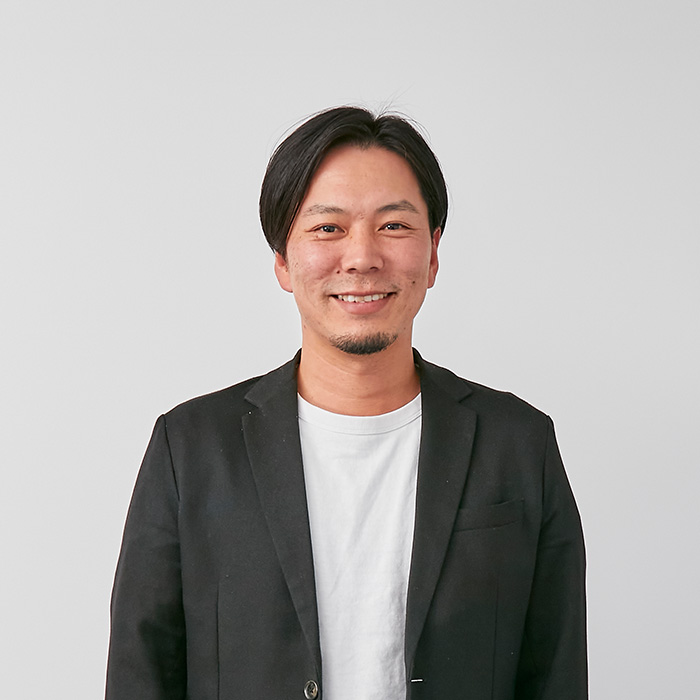
Author
Satoshi Takatani Takatani Satoshi
Faculty of Global Nursing
Associate Professor
Research Field
Nursing, Health and Hygiene
Research Topics
Family Concordance Autism spectrum disorder Respite Care Nursing Education Digital Systematic review