

Our "shaking, touching, heart-touching"
Stepping into the unknown with "VR," becoming an engineer who continues to evolve with "AI."
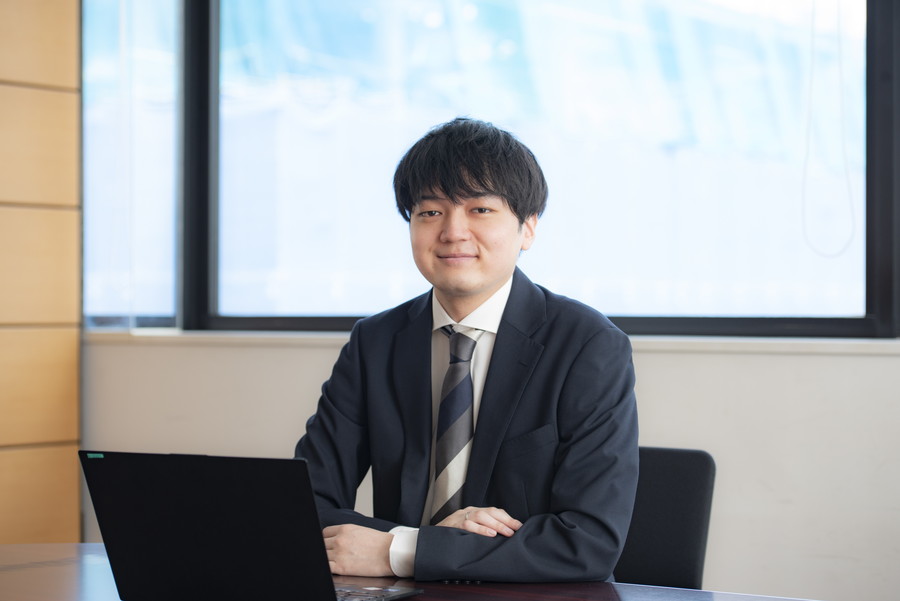
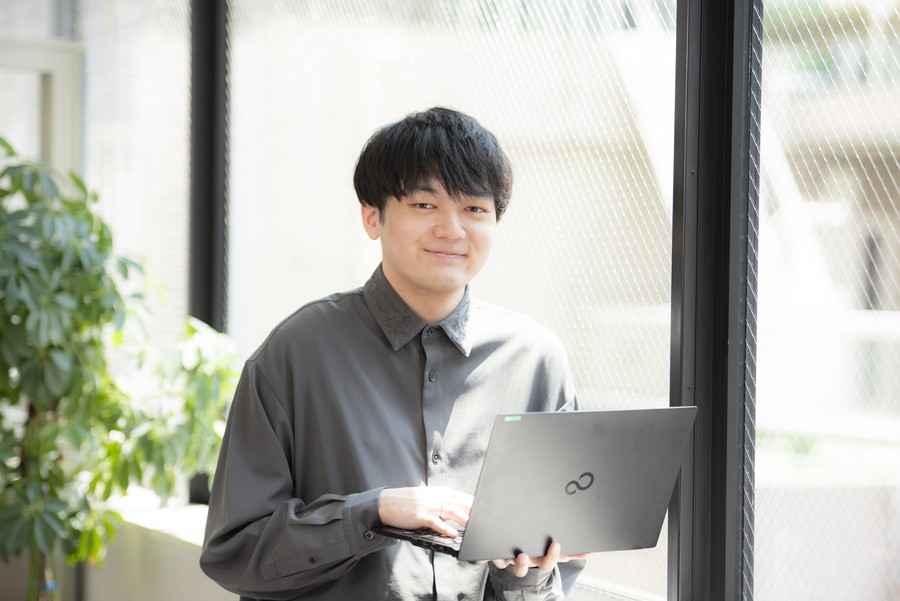
System Engineer, Japan Enterprise Co., Ltd.
Riku Sasaki
"Communication skills" honed through numerous presentations and experience as a video production staff member.
University life was a series of experiences where I had to "communicate in front of others." Starting with self-introductions in my first year, I was given many opportunities to present my work in stages, from presentations in English to research reports in seminars, and finally to the presentation of my graduation thesis.
What I remember most is the feedback I received after each presentation. I received evaluations from each student in the audience, such as "clarity" and "ease of listening," as well as specific comments, and I used that to make improvements. Through repeated presentations, I became aware of my own communication habits and challenges, and I feel that I naturally developed the habit of thinking about "how to communicate effectively with others."
These experiences went beyond simply becoming comfortable with presentations; I feel that the process of organizing information and choosing words while considering the audience's level of understanding is directly connected to my current work. Also, during my job search, there were many situations where I had to summarize and convey key points within a limited time, and I was able to utilize this skill when explaining deliverables during training after joining the company.
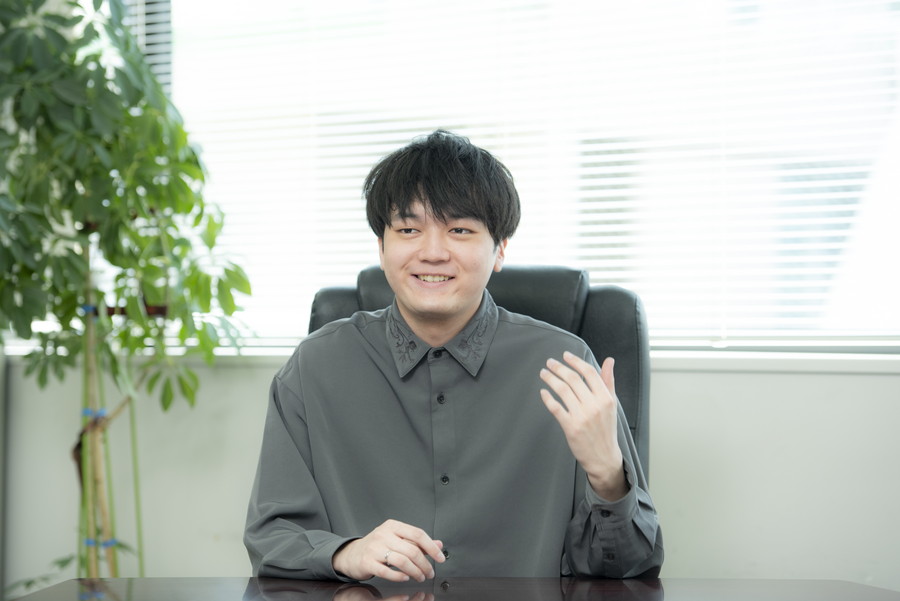
Furthermore, taking on roles advertised on the campus bulletin board, such as IT support staff and student staff for video production, proved to be a great help. In particular, as a member of the video production staff, I gained practical experience in roles such as filming and editing for school festivals, open campus events, and presentation competitions, as well as operating a camera switcher for live streaming. It was an opportunity to focus not only on filming, but also on editing while considering how to create videos that effectively communicate the message, thus becoming more conscious of the quality of the output.
Furthermore, taking advantage of Otemae University 's characteristic crossover learning approach, I took courses in a wide range of fields, not limited to my major in Information Technology. I feel that being exposed to different areas such as Psychology, media, regional culture, and music helped me develop a multifaceted perspective on things. In particular, the fundamentals of composition I learned in the "Sound Design" class remain so memorable that I still refer back to them today, and they have even led to my hobby of music production.
My encounter with "VR" and my challenge with a "VR project" at the school festival.
My interest in VR began in my third year of university. A senior's graduation thesis sparked my desire to learn more about VR, but at the time there wasn't as much information available in Japanese as there is now. I deepened my understanding by translating explanatory articles and technical documents from overseas. Although it was a process of trial and error, I felt like I was touching an unknown technology, and the more I learned, the more I found it fascinating.
As an extension of that, we worked on a "VR project" for the school festival. We formed a team with friends and challenged ourselves to recreate the university buildings in a VR space. During the summer break, we went to the university, took photos using 360-degree cameras and smartphones, and used those to construct a 3D space.
However, production did not proceed smoothly. The more detailed we made the model, the larger the data volume became, and we faced the problem of it not running smoothly in VR. We had to confront the gap between our ideal and reality and consider how much to reproduce and what to simplify.
Ultimately, we were able to complete two types of exhibits by simultaneously building a full-fledged VR space while optimizing the data size, and also by simultaneously developing a reproduction using a different method. Through this experience, I learned not only technical skills but also the importance of choosing the optimal method for a given objective. It was a moment when I truly realized the importance of finding the best solution within constraints, rather than just relying on ideals.
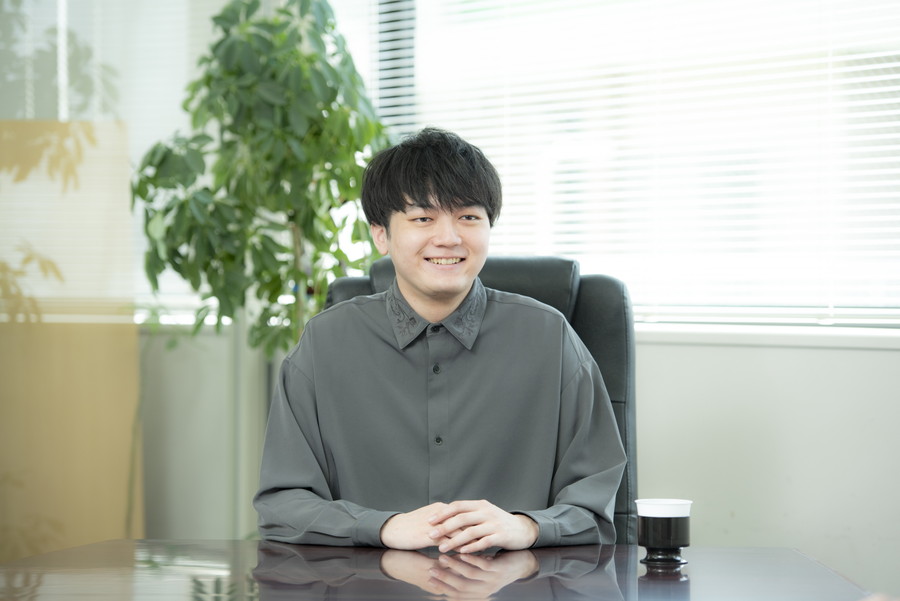
I chose "VR" x "Music," a topic I was interested in, for my graduation research.
For my graduation research, I combined my interests in "VR" and "music," and chose the theme of "Music Appreciation in VR Space." My aim was to clarify how the impression of music changes when visual information is added.
In the study, participants first listened to music with their eyes closed and recorded their impressions. Then, they experienced the same music in a VR space, and the changes in their impressions with the addition of visual information were compared. In addition to the music itself, changes in interest in and awareness of the composer were also investigated.
As a result, while visual information can concretize the image of music and increase satisfaction, it was found that some people felt that "it was different from the image they had imagined." In some cases, the addition of visual information narrowed the scope for free interpretation, and was perceived as actually limiting how people could enjoy the music.
What I gained through this research is the realization that "showing" something doesn't necessarily increase its value. Technology expands the range of expression, but it doesn't necessarily mean that it's optimal for the recipient. The perspective of how to handle the leeway of individual feelings and interpretations has influenced my subsequent creative work and way of thinking.
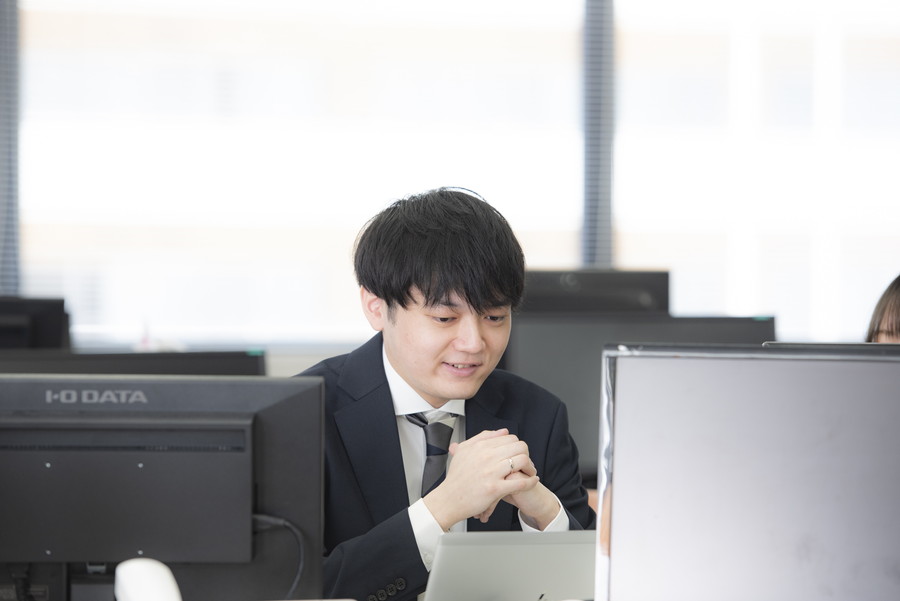
The skills required in the development field and expectations for the new "Faculty of Information Science"
Currently, I work in development at an IT company, where I'm involved in the modification and development of various web services. After joining the company, I underwent approximately three months of training before being assigned to an actual project. To date, I've been involved in several projects, including updating services provided by telecommunications companies and developing websites commissioned by other companies.
What stands out most in my memory is web development in a serverless environment. Because it was an unprecedented undertaking at our company, we went through a lot of trial and error to bring it to fruition. I feel that my experiences challenging myself with new technologies like VR during my student days are connected to my current work.
When developing, I prioritize meeting deadlines and creating clear and easy-to-understand documentation. Furthermore, code isn't something you write once and forget; it's something that other team members and my future self will understand and modify. Therefore, I strive to create a structure and writing style that is easy for anyone to understand, ensuring a continuity of development.
What I'm noticing on the ground is a shift in the skills required of IT professionals. The evolution of AI has lowered the barrier to entry for writing programs themselves. Of course, skills like Python learned in university or PHP learned in training are essential for engineers, but at the same time, the ability to interpret code generated by AI and the ability to design systems from a holistic perspective are becoming increasingly important.
Furthermore, the ability to elicit customer requests and translate them into concrete specifications is essential. I feel that not only technical skills but also the ability to interact with people and understand their intentions is required.
The foundation of these abilities lies in the communication skills and teamwork experience I cultivated during my university years. I truly feel that the skills I acquired through presentations and collaborative work with colleagues are proving invaluable in my current job.

I've heard that the "Faculty of Information Science" (*), scheduled to be established in 2027, will offer learning that includes not only AI and information technology, but also human sensibilities and experiences. In the future of the information field, learning that emphasizes not only technology but also ways of thinking and processes will become even more important, and I'm honestly a little envious (laughs) of how much stronger Information Technology major, which I belonged to, will become. The opportunity to experience everything from theme setting to design and implementation, and to be exposed to the latest technologies and equipment such as VR and AI, will enable more practical learning, which I think will be useful for each individual's work and future life.
Although I'm still relatively new to the IT industry, I hope that Otemae University will become a place that cultivates individuals who can not only handle technology but also consider "how people feel." Personally, I feel that what I learned at Otemae is definitely connected to my current work, and that this experience will continue to expand into the future.
We will continue to embrace new technologies and create products that deliver value to people and society.
*Scheduled to open in April 2027 (tentative name; application for establishment permit is pending. The information provided may change.)
*All information is based on interviews conducted at the time. (June 2026)