

Our "shaking, touching, heart-touching"
The path to Psychology that was guided by human connections.
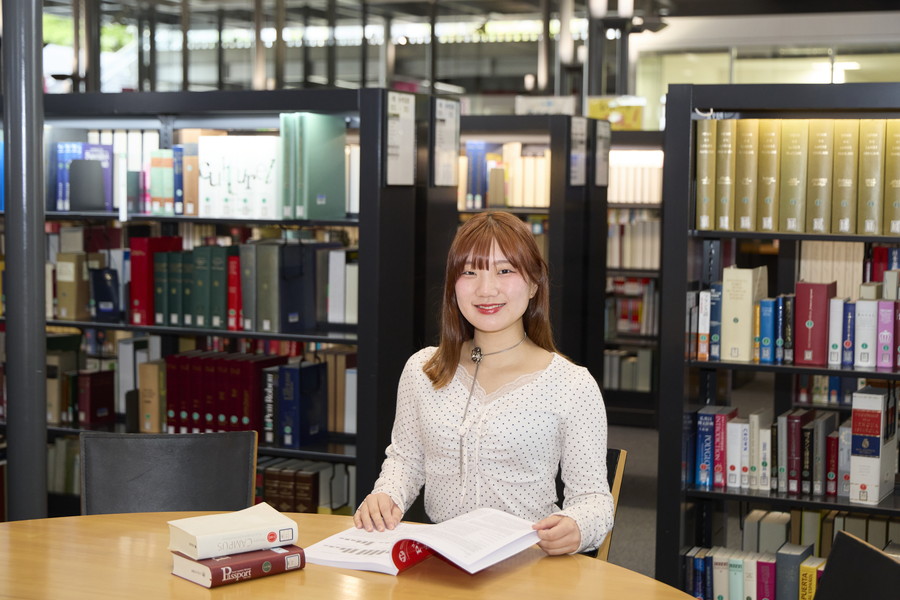
Rinka Odajima
I was drawn to the "Psychology" I was interested in, the broad range of learning opportunities, and the environment where professors provide individualized support.
My interest in Psychology began with a research project I did in high school. As a student in a comprehensive high school program, I had the opportunity to choose a topic and conduct research once a year. My research topic was "What kind of people are approached by strangers on the street?" I experimented by creating composite images to alter impressions and conducting questionnaires to collect data. I found it fascinating to realize that "there are reasons behind people's behavior," and that's when I decided I wanted to study Psychology.
However, at that point, my main feeling was that "Psychology seems fun," and I didn't really know if it was right for me or what different fields it encompassed. That's why I wanted to go to an environment where I could learn as broadly as possible, along with Psychology, and that's why I became interested in Otemae University.
I still remember how impressed I was when I consulted a professor about my research during an open campus event. They listened carefully to what I had to say and advised me, "It's interesting to think about it from the perspective of the unconscious." I felt that there was an environment where each student was given individual attention, and that naturally made me think, "I want to study here," which was the deciding factor in my enrollment.
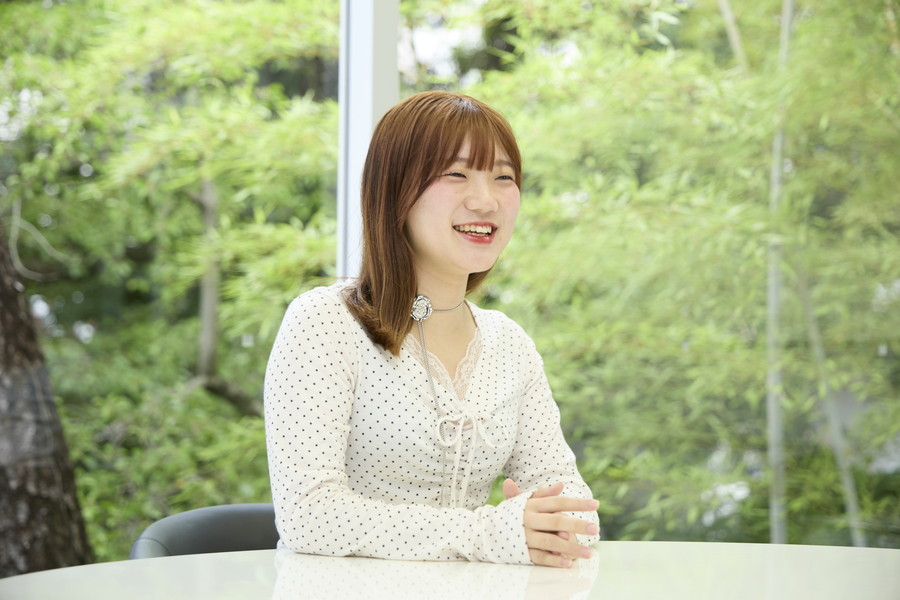
Meeting my teacher changed my perspective from "I don't understand = I can't do it" to "It's okay to ask because I don't understand."
I've never been a very confident person, and even after starting school, I was mostly filled with anxiety about whether I could really manage. I've always had a hard time with English, and I was afraid of being in a state where I didn't even know what I didn't know, so I sometimes avoided it.
For me, the turning point was the required English class in my first year. The teacher patiently answered even the smallest questions, and I began to think that "it's okay not to leave things unresolved." Before that, I thought that "not understanding = not being able to do it," but my attitude gradually changed when I started to think that "it's okay to ask questions if I don't understand." As the moments of understanding increased, my aversion to English also lessened.

Following that, I joined an English club and also participated in the activities of the international exchange student staff, "Team Colors." At first, I was even afraid to speak to international students, and I was filled with anxiety about what would happen if they didn't understand my English. But as I actually interacted with them, I realized that words aren't everything. Feelings can be conveyed through gestures and facial expressions. I came to feel that there is value in the act of "trying to communicate" itself.
Working with people who spoke different languages at my part-time job allowed me to gradually improve my communication skills, and that feeling of being understood boosted my confidence. Now, I can naturally offer help to people who seem to be in trouble. This is a change I couldn't have imagined before. I feel that the biggest change isn't so much that I can speak English, but rather that I've come to believe that I can do it.
President Award at the Presentation Grand Prix. Helping people turn their "I want to try" ideas into action.
One of the biggest changes I experienced during my university life was that I became able to actually take action on things I wanted to try.
Our university offers many opportunities to take on challenges both inside and outside the university, providing an environment where you can take that first step when you feel like trying something new.
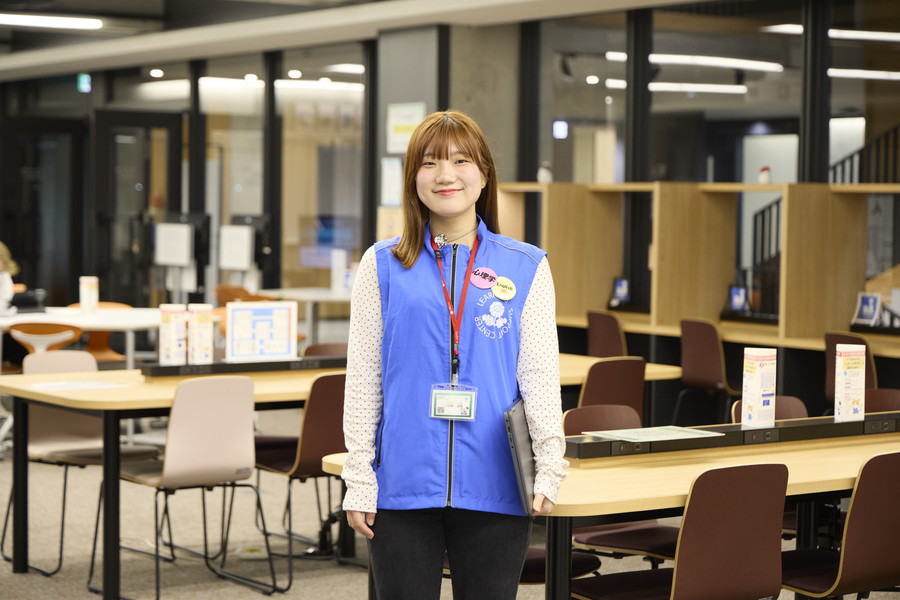
Learning Support Center provides assistance to students who are struggling with their assignments. I was originally a user of their services, but I decided to take on the challenge because I wanted to help others in return.
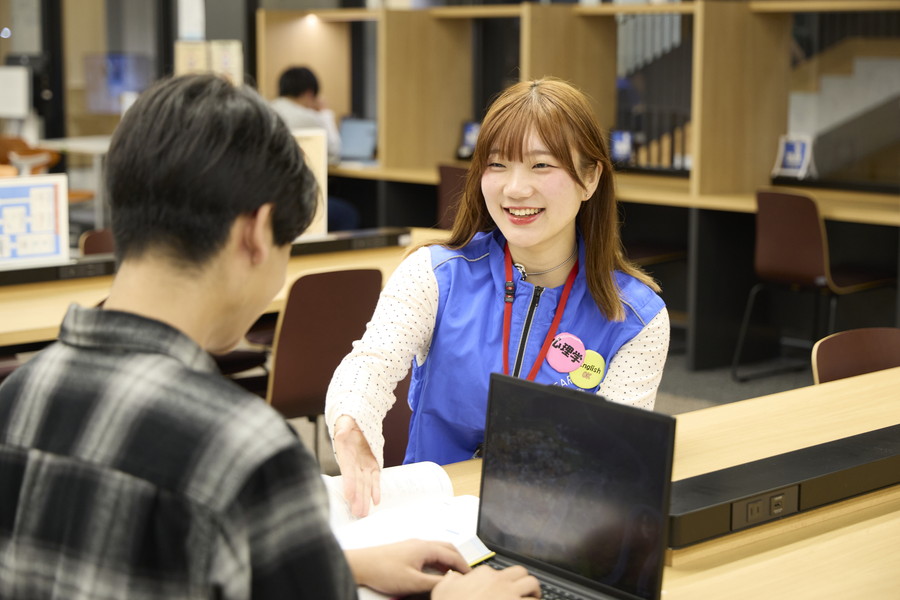
I also entered the "Otemae Online Presentation Grand Prix" and was awarded President Prize. The theme was "Even without a common language, communication is possible." Based on my past experiences, I believe I was able to convey my message in my own words. There were many things I was doing for the first time, such as video editing and structuring, and there were times when things didn't go well, but I consulted with my teachers and friends and gradually brought it to fruition. I also learned the importance of "relying on others" rather than "trying to do everything alone."
My experience in the PBL (Project-Based Learning) exercises also left a lasting impression on me. Through daily feedback, I was able to objectively understand my strengths and weaknesses. I tended to strive for perfection, but encountering the idea that "it's okay to leave things I'm not good at to others" and "it's important to develop my strengths" made me feel much more at ease. I believe this experience was the catalyst for me to become a more proactive person.
Aiming to pursue graduate studies. I want to support people through learning that connects people.
Currently, I'm working on research with the theme of "AI and counseling." I'm thinking about how we can use AI to create a system that makes it easier for people who are struggling to talk to someone. AI isn't meant to solve everything, but rather to create an opportunity for people to talk to someone. I believe that the important thing is for people to connect with each other after that.
My interest in this topic stems from my past experiences. I've seen people close to me suffering because they couldn't talk to anyone about their problems. I thought that if there was even a small way for them to talk, it might lighten their burden. That thought led to my current research.
In the future, I plan to pursue graduate studies to further my knowledge of clinical Psychology. My goal is to work as a counselor, supporting people while also pursuing a career as a researcher and university professor.

Finally, to those of you considering higher education: I encourage you to speak out about what you want to do and what you're thinking. A little courage can make a huge difference to yourself and your environment. I experienced this firsthand during my university life.
Even if you feel anxious at first, taking that first step will lead you to meet people who will support you. Taking action will undoubtedly broaden your horizons.
Even someone like me, who lacked confidence, was able to change this much. From now on, I want to use that experience to inspire and encourage others.
*All information is based on interviews conducted at the time. (July 2026)