

Our "shaking, touching, heart-touching"
Both English and yourself: the more you move, the wider your world becomes.
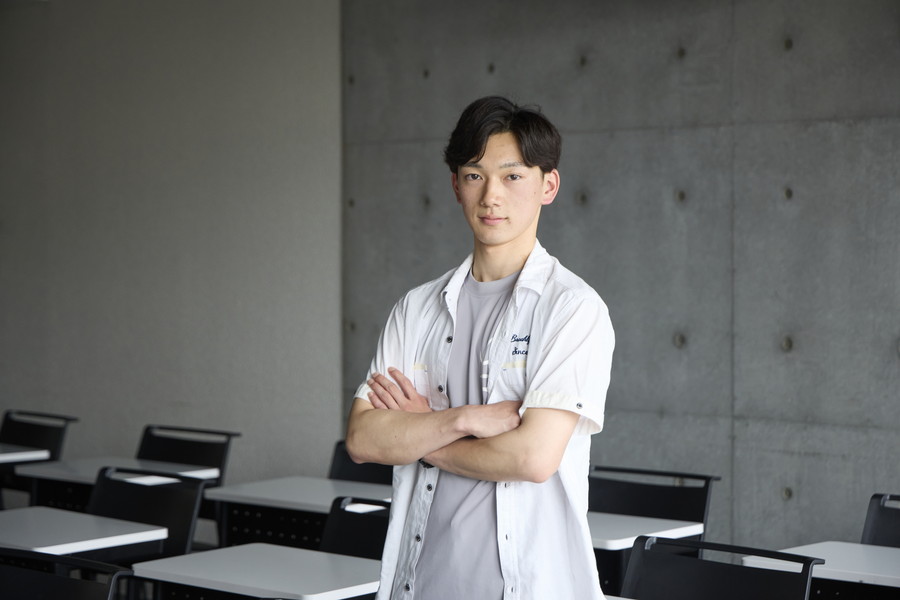
Takeshi Saito
Starting from the desire to "find something by interacting with people" and "to interact with people from overseas."
Until high school, I was focused on science, and I wasn't particularly good at English. To be honest, I didn't really like it. When it came time to think about my future career path, I couldn't find anything I could say "I want to do this," and I was unsure whether I should continue down the science path.
Amidst all of this, a thought suddenly occurred to me: "Maybe I still don't know anything." The reason I don't know what I want to do might simply be because I lack experience. With that in mind, I decided to start by discovering what I like through interacting with people.
And since I wanted to interact not only with Japanese people but also with people from overseas, I started looking for a university with English as the focus. I chose Otemae University because, in addition to its comprehensive English education program, studying abroad was not mandatory. I was attracted to the environment where I could challenge myself at my own pace.
Back then, I think my desire to "find something through interacting with people" was stronger than my desire to "do something using English."
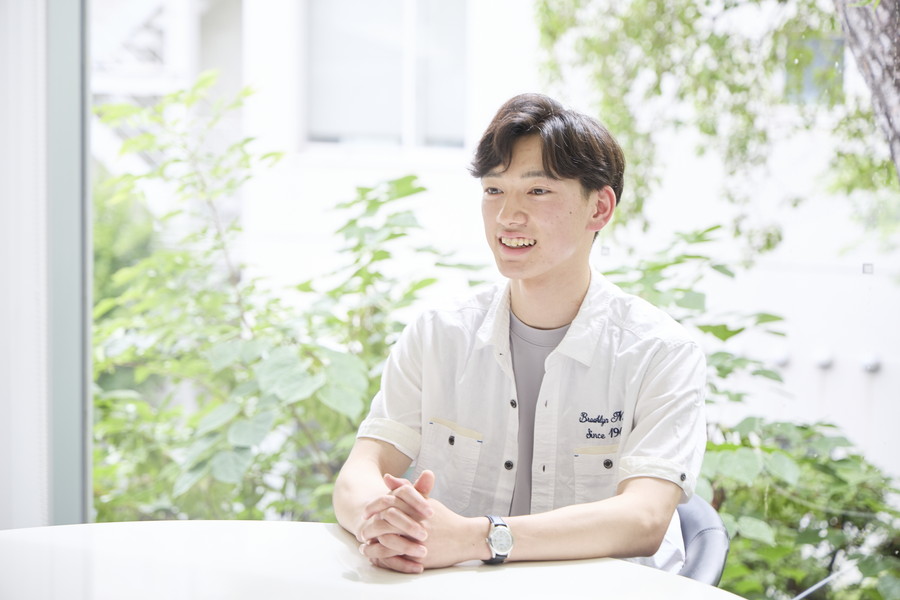
My English Challenge Started with "I Can't Understand What the International Students Are Saying"
After enrolling, I decided to seriously dedicate myself to English, and in addition to the "LEO" courses, which are taught at different levels, I also challenged myself with the advanced English learning program "GJS (Global Japan Studies)" from the fall semester of my first year. GJS is a program where students study specialized subjects in English together with international students, and it's not just about learning English, but about deepening new knowledge and cross-cultural exchange using English. All classes are conducted in English, and the content is at the same level as universities overseas. At first, I was in a state where I "couldn't understand anything everyone was saying."
While the other students were speaking up as if it were the most natural thing in the world, I felt like I was being left behind. More than frustration, I think I felt more anxious, wondering if I was in the wrong place. Nevertheless, as I continued to attend classes, I gradually began to understand more words, and there were moments when the meaning started to connect. I believe that the reason I was able to continue with GJS was because Professor Gordie, who is now also my seminar professor, really understood my motivation.
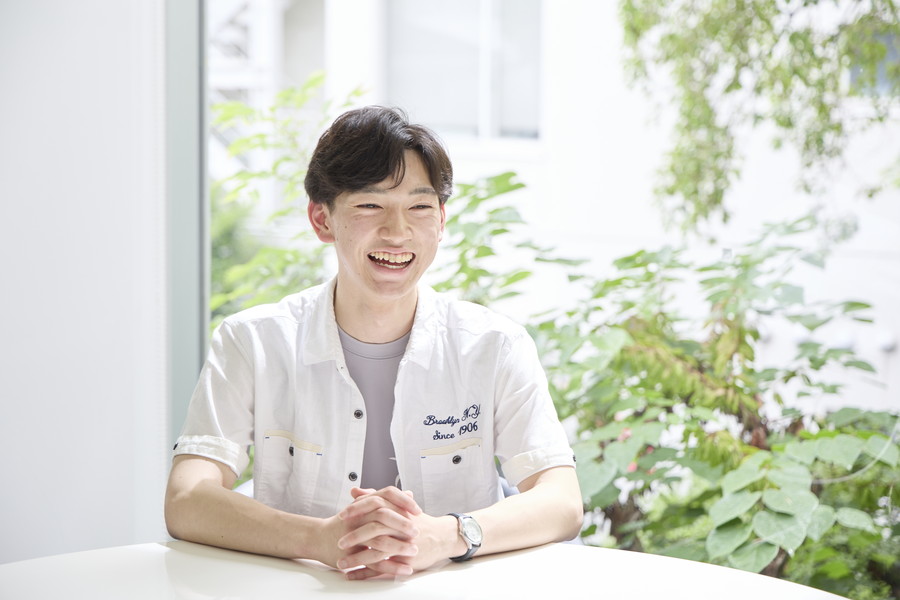
Also, through interacting with international students from Myanmar in LEO classes, I was inspired by their efforts to support themselves through part-time jobs while paying their tuition, and it made me feel that I could challenge myself more. It was around this time that I began to view my circumstances positively, rather than pessimistically.
Furthermore, through interacting with international students, I realized how fortunate I am to be in such a privileged environment. Instead of looking for reasons why I couldn't do something, I decided to make the most of my current circumstances and seize opportunities. This realization was a major turning point for me.
In terms of English proficiency, the "Cross-Cultural Communication" class left a lasting impression on me. It was a class where we learned about misunderstandings due to cultural differences and non-verbal communication in English, and I was the only Japanese student. I had to explain my own culture in English and understand other people's cultures in English, which made it a very challenging environment.
Through this experience, I realized that communication isn't just about "speaking correct English." What's important is the willingness to communicate and the awareness of trying to understand the other person. I also feel that my psychological barrier to learning English has significantly decreased.
My frustration led me to study abroad in the Philippines, and my growth through "Team Colors"
The most memorable experience I've had so far was meeting an American exchange student during my first year. I tried to talk to her, but I didn't know what to say or how to say it, and in the end, I couldn't have a proper conversation. At that time, I felt a strong sense of frustration and helplessness. I had something I wanted to say, but I couldn't. That frustration left a lasting impression on me.
Realizing that things couldn't continue like this, I did my own research and found a short-term study abroad program in the Philippines. I applied on my own, rather than joining a university program, and spent five weeks there during the summer of my second year.
In an environment where I had no choice but to use English, I initially struggled to speak fluently. However, through daily conversations, I gradually gained a sense of confidence that "I could communicate in English." For the last three weeks, I participated in an intensive course, with classes and quizzes from morning till night. It was tough, but I also felt a significant change in myself. After returning to Japan, I became less hesitant to speak up in class and was able to initiate conversations with other international students outside of class.
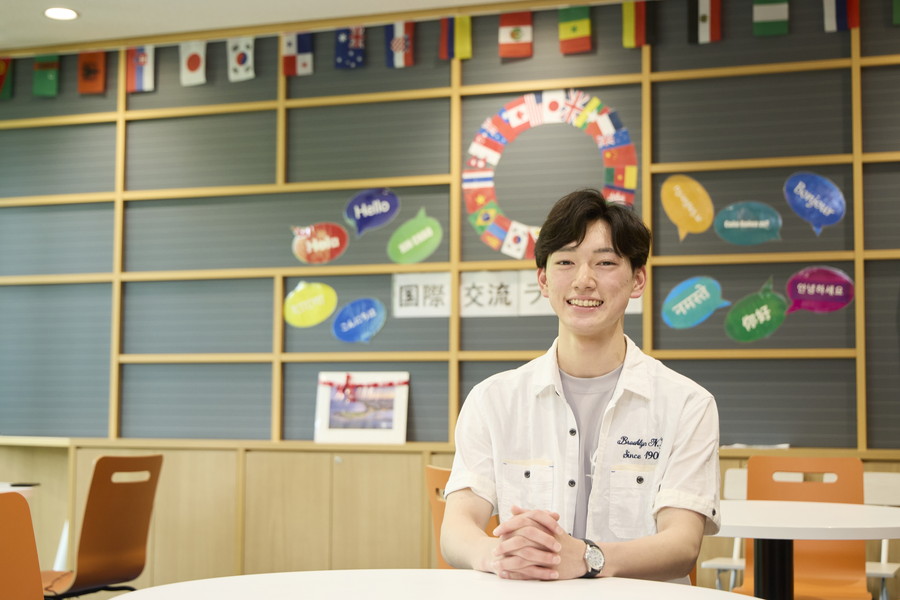
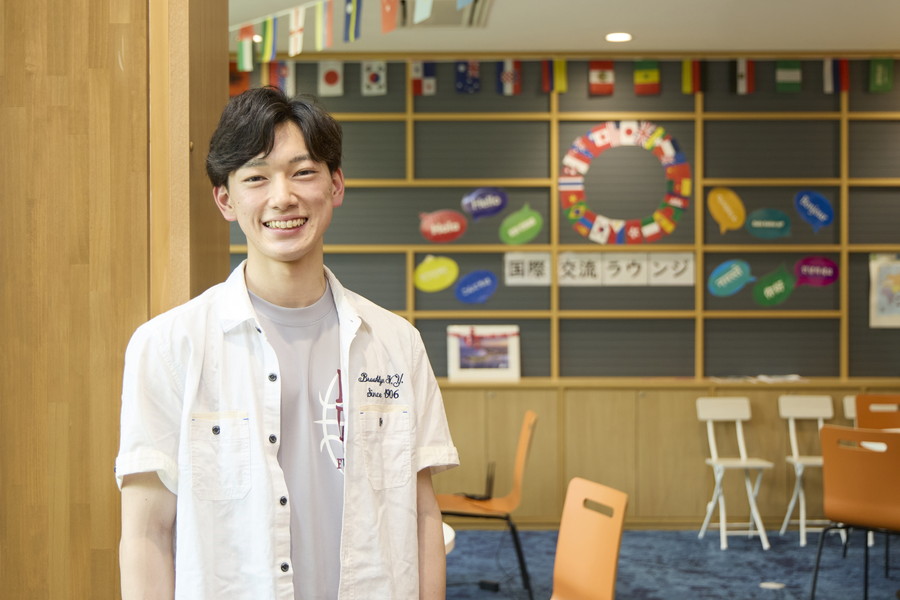
Currently, I am a member of the international exchange student staff group "Team Colors." My involvement began when I learned about Global Center through a conversation with an international student and decided to visit. I've been involved in planning, managing, and presenting events, and I even introduced our group at the entrance ceremony. I was nervous when I delivered a message in front of over 1000 people along with the international students, but it was a valuable experience.
At the Christmas party, I gave a presentation about Japanese culture in English, and I also gave a presentation at an activity report meeting for the university and students. Furthermore, in the speech contest, I teamed up with a student from Vietnam and challenged myself to give a speech in Vietnamese, her native language, and we were able to win the Otemae Award.
The experience of not only learning the language but also "stepping into the other person's culture" has been very meaningful to me.
On the other hand, we have also identified some challenges through our activities. Participating students are predominantly from Faculty of Intercultural Japanese Studies, and the program is often not well-known in other faculties. That's why we want to create a community where students from across faculties can get involved. We believe that richer interactions will be born when students from diverse backgrounds come together.
My own future revealed through connections with people
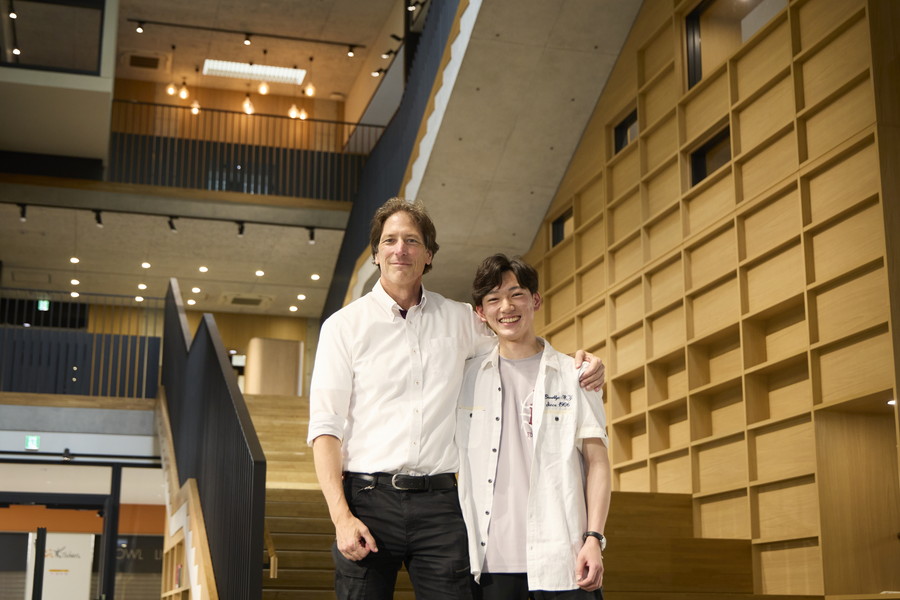
Of all the one-on-one learning experiences, meeting Professor Gordie was particularly memorable. I received a lot of advice from him when I went to ask him questions after class, and his words, "We'll help you write papers in English that's accepted internationally," encouraged me to choose his seminar. Professor Gordie also supported me when I challenged myself to take the GJS course, and I remember him telling me, when I consulted him about elective courses, "Why not try something new?"
Currently, in my seminar, we are learning about the origins of Japanese culture and the history of immigration. We also had the opportunity to invite a graduate from Taiwan to talk about the challenges of working in Japan. With only two Japanese students out of ten in the seminar, we are learning while being exposed to diverse values.
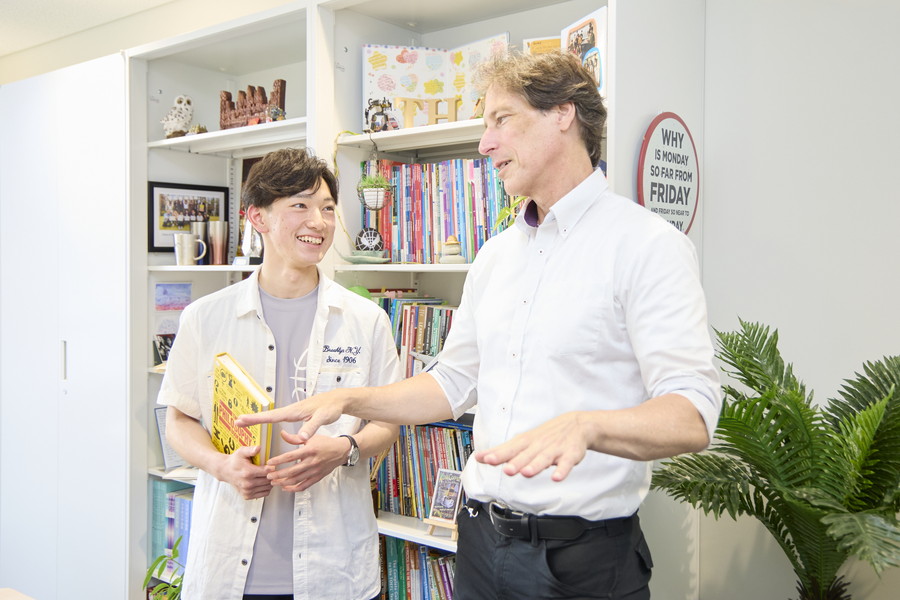
I am also taking courses to train Japanese language teachers. I chose this because "Registered Japanese Language Teacher" has become a national qualification, and I wanted to obtain it as a future career option. I also heard from international student friends that their Japanese language teachers were strict, and I felt that I could be more friendly and create an environment where learning is enjoyable, which motivated me to take these courses.
My future plans are still unclear, but I am certain that I want to be in an environment where I can continue to interact with people. I am also interested in living abroad and participating in working holidays, and in the future, I would like to be involved in educational support and community building in impoverished areas. I feel that this could ultimately lead to the development of the region and society.
Before entering university, I felt like I didn't know what I wanted to do, but now my own values are gradually taking shape. I respect other people's opinions, but I also make sure to express my own thoughts. And I leave the final decision to the other person. I used to be the type of person who couldn't really express my opinions, but now I feel like I can communicate them naturally.
Furthermore, our university offers opportunities to experience different cultures, such as "International Exchange Day," but many students are unaware of its existence. I want to help students make better use of this valuable environment, and I want to spread awareness of its appeal, involve students from various faculties, and create opportunities to connect with local residents.
Meeting people, experiencing disappointment, and continuing to take action despite those setbacks—these experiences have shaped who I am today. I want to continue moving forward step by step, expanding my possibilities and world through new encounters.
*All information is based on interviews conducted at the time. (August 2026)