

Our "shaking, touching, heart-touching"
Taking the first step of studying abroad, building a career fueled by that learning, and then changing jobs.
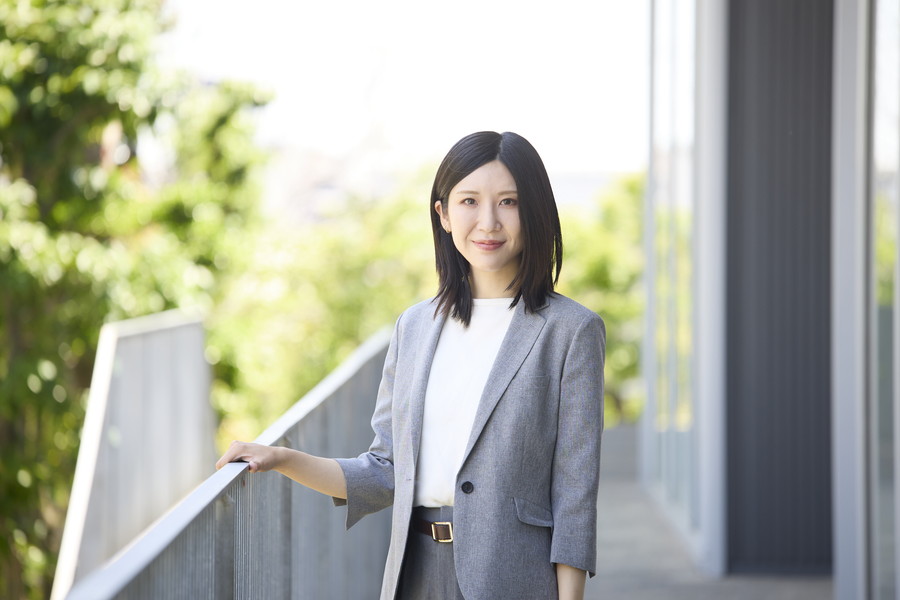
Contract and placement positions at a group company of a comprehensive electronic components manufacturer.
Hiraide Urara
My college life, which started with anxiety, has transformed into a daily routine where I think, "This is so much fun!"
More than 10 years have passed since I graduated from Otemae University.
"I can go anywhere." My experience studying abroad during university was a major turning point in my ability to feel this way.
After graduating from high school, I worked for a year before entering university, so at first I was worried about whether I would get along with my classmates who were a year younger than me. But once I actually started attending, I found that Otemae University had students of all ages and backgrounds, and there was a welcoming atmosphere where I felt naturally accepted.
Through orientation and required classes, I made friends and realized, "University life is so much fun!" Having worked in society before, my longing for university life was even stronger, and I think it was truly a wonderful time.
I also remember being able to take a wide range of lectures without being tied to a specific field at the Faculty of Integrated Cultural Studies (now the Faculty of Intercultural Japanese Studies). I chose a variety of courses, from information technology lectures to novel writing classes, film commentary, and geography, and gained knowledge from them all.
I didn't originally have a clear goal of "this is what I want to do." Therefore, I was very grateful for the environment that allowed me to learn freely according to my interests. Every class was interesting, and I looked forward to going to university every day.
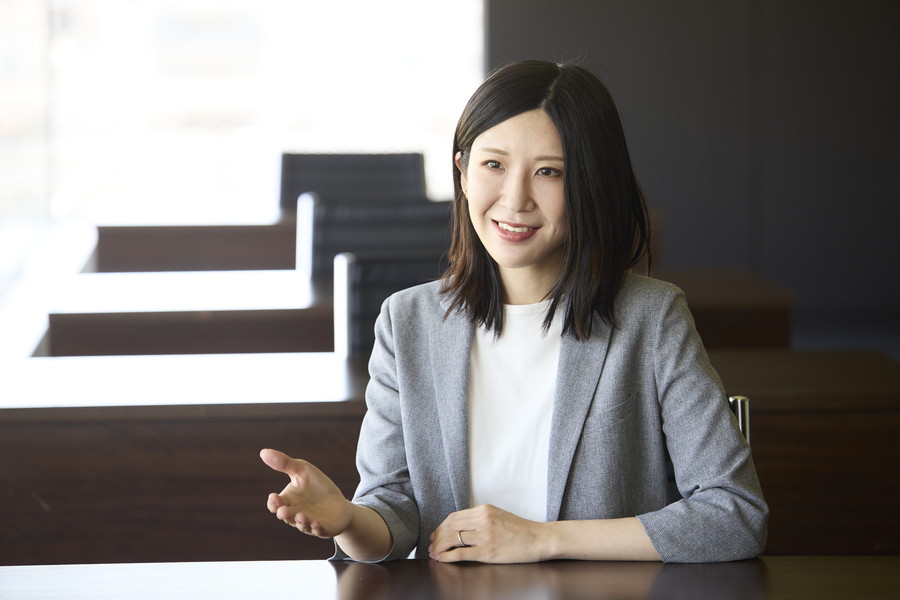
Overcoming anxiety and loneliness during my time studying abroad, I gained the confidence that I can survive anywhere.
A major turning point in my student life was my short-term study abroad experience in the UK during the first semester of my second year. This experience perfectly embodied the "cross-boundary learning" characteristic of our university's education.
At Leeds Trinity University, where I was studying abroad, I was the only Japanese student in most of the classes. My English skills weren't good enough, and I struggled to keep up with the lessons, which made me feel very lonely.
At the time, I kept my spirits up by calling and emailing friends in Japan. To be honest, I was constantly thinking, "What should I do?" But I knew I couldn't go on like this, so I started looking for a language school. In the end, I ended up attending both university and two language schools, and I was incredibly busy every day. Gradually, I became able to understand and speak English, and my anxiety turned into enjoyment.
Then, when my study abroad program ended, I took advantage of the summer holidays to travel around Europe by myself for over a month. I encountered various troubles along the way, such as missing my bus and making mistakes with my hotel reservations, but each time I managed to overcome them on my own, and I think that's how I developed a sense of "I can do it!"
Through this experience, I came to believe that "I can manage on my own" and "I'll be alright wherever I go," which is a great asset that still supports me even now that I'm a working adult.
Even after returning to Japan, I actively pursued things that interested me. In my seminar, I planned and ran a Bibliobattle (where participants bring their recommended books, each giving a book review within a set time, and then the participants and audience decide which book they most want to read). I had originally participated in events outside of school, but when I mentioned it to my professor, he suggested, "Why don't you try doing it in the seminar?" and so we actually held the event. I was very happy that there were people who were interested in something I had been doing out of love and wanted to participate.
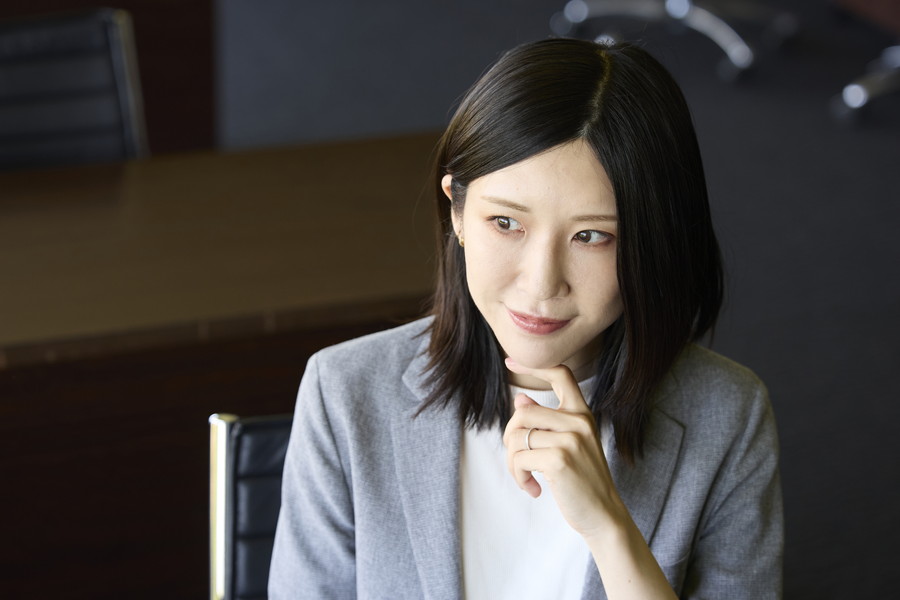
What I want to convey to those who will be studying at university is the importance of "taking initiative."
University offers a free environment, which means that if you take initiative, you can gain many opportunities. On the other hand, if you distance yourself from these opportunities, you may end up gaining nothing. Even if you have supportive professors and many classmates, if you don't take that first step yourself, time will simply pass by.
Make full use of everything at your disposal, such as your teachers, friends, and university programs. Once you enter the workforce, you won't often find an environment where you can so easily seek advice and try out so many different things. I believe that "doing your best now," including your job search, will lead to a better life in the future.
My university studies and experiences proved valuable in a job that involves interacting with people, leading to a positive career change.
After graduating, I joined Mynavi Corporation as a new graduate and was involved in the human resources development business. Later, due to the division being spun off into a separate company, I was seconded to Mynavi Works Corporation and have consistently been involved in temporary staffing operations.
Initially, I worked in sales, handling tasks such as developing new clients. Later, as a coordinator, I became involved in a wide range of tasks, including interviewing newly registered staff, matching them with job openings, selecting advertisements, and managing bidding projects related to elections and government agencies.
In my work, I have opportunities to interact with people from various professions and with diverse values. In these situations, I often find that my experience of studying a wide range of subjects during my university days is invaluable. Knowing even a little bit about something can serve as a conversation starter and help me understand the other person. Furthermore, my ability to view things calmly and without being overly affected by immediate events is also a result of the various challenges I faced during my student days.
While efficiency and systematization are required in my work, I feel that the concepts I learned in my IT classes form the basis of my work. I think that the perspective of thinking about "how to proceed efficiently" and "how to systematize" is naturally put to use in my daily work.

Furthermore, having worked in the human resources industry for over 10 years, I feel that the importance of IT skills is increasing more and more. The MOS Expert certification and the Level 1 Typing Proficiency Test certification I obtained while in school were also helpful during my job search.
Furthermore, we now live in an era where AI is used on a daily basis. In fact, we often see people using AI to create application documents and emails. However, I feel that depending on how it's used, it can sometimes make it difficult to convey intentions or negatively impact the impression one makes. That's why I think there's a demand for people who can think carefully, develop the ability to communicate in their own words, and then utilize AI effectively.
With a desire to leverage my past experience while challenging myself in a new environment, and prioritizing a workplace that makes it easy to balance work and childcare, I recently changed jobs to a group company of a world-class integrated electronic components manufacturer headquartered in Kyoto.
While I will continue to cherish the core principle of "connecting people and work" that I have cultivated throughout my career, I would like to contribute as a member of the group by supporting the work of each and every employee.
I was anxious about venturing into an unfamiliar field, but the "just try it" attitude I cultivated during my university years, and my ability to adapt to new environments, have been a great support here as well. I want to cherish the learning and insights that come from being in a new environment, broaden my horizons even further, and challenge myself to explore what I can do.

"As a mother, and as a working professional." I want to continue living a life where I don't give up on either.
Currently, I'm busy every day raising my two daughters with my husband, whom I met at Otemae University.
To be honest, balancing work and childcare is not easy. There are times when I feel frustrated because I can't work as much as I'd like. Even so, I don't want to give up either "myself as a mother" or "myself as a working professional." I could have chosen to quit my job after giving birth, but I wanted to cherish the career I had built over the past 10 years, so I chose to continue working.
As children grow, the balance between parenting and work will inevitably change. Even so, I want to cherish both, adapting to the circumstances at each stage. I don't know what the future holds, but with the feeling of "Mommy's doing her best, so you do your best too," I want to continue growing alongside my daughters.
*All information is based on interviews conducted at the time. (August 2026)
*1 While it is possible to study in other faculties as a crossover, such as in the Faculty of Integrated Culture (now Faculty of Intercultural Japanese Studies) and the Information Major (now Information Technology Major Faculty of Modern Social Studies), currently, the graduation requirement is that students must major in the "major of their own faculty."