

Our "shaking, touching, heart-touching"
"Just give it a try." A broad range of learning paved the way for a career that connects technology and people.
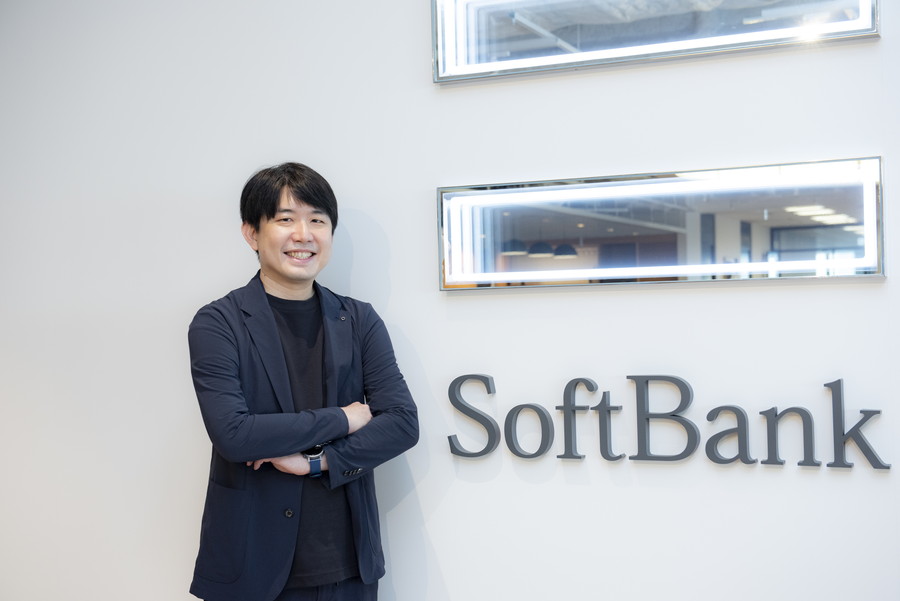
SoftBank Corp.
Solution Engineer
Kosuke Nasu
"Information technology" and "Psychology." I was drawn to the environment where I could study multiple fields that I was interested in.
When I entered university in the early 2000s, broadband internet was just starting to become widespread in homes, and mobile phones were beginning to have cameras. Dial-up connections gave way to ADSL, and home internet speeds suddenly increased. The newly emerging digital world was simply fascinating, and I had a strong desire to learn about computers.
On the other hand, I wasn't originally a science-oriented person. In high school, I studied drawing with the intention of going to an art university, and I was also interested in Psychology.
What was appealing to me was the Department of Social Information (at the time) in the Faculty of Social and Cultural Studies at Otemae University. In addition to the fundamentals of information technology, I could also study Psychology and sociology. I was drawn to the environment where I could study across multiple fields that interested me, and that's why I enrolled.
In fact, I took a fairly wide range of courses at university. I took Psychology classes on mental health, and sociology classes comparing various cultures. There were also classes where we did fieldwork, researching shrines and forests, interviewing local people, and compiling our findings into reports. It was really interesting to learn about so many different things, rather than being limited to just one field.
If you ask me if everything I did is directly related to my current job, the answer is no. But even now, more than 20 years after graduating, I still remember many of the classes I took. I think that shows how much I was exposed to during my student life.
In the IT field, I also learned basic skills such as Word, Excel, and PowerPoint. At the time, I not only wrote my graduation thesis but also had the opportunity to present it using PowerPoint, and the experience of speaking in front of others has been useful in my job search and even after becoming a working adult.
The art club and the school festival committee—these experiences of interacting with people are what connect me to where I am today.
I was a member of the art club in college. I would repaint oil paintings I had done in middle school and make robots using wire. At the school festival, we all made a large art piece using plastic bottles and displayed it at the entrance.
Also, from my first year, I participated in the school festival committee, where I gained experience in various tasks such as allocating tents and handling procedures with the public health center as the person in charge of the food stalls. In my third year, I was both Director of the art club and a member of the school festival committee, and the period when both activities overlapped was quite challenging, but now it's a fond memory.
At university, I met new friends and professors, and I was exposed to many things I had never known before. I believe that the accumulation of these experiences broadened my world.
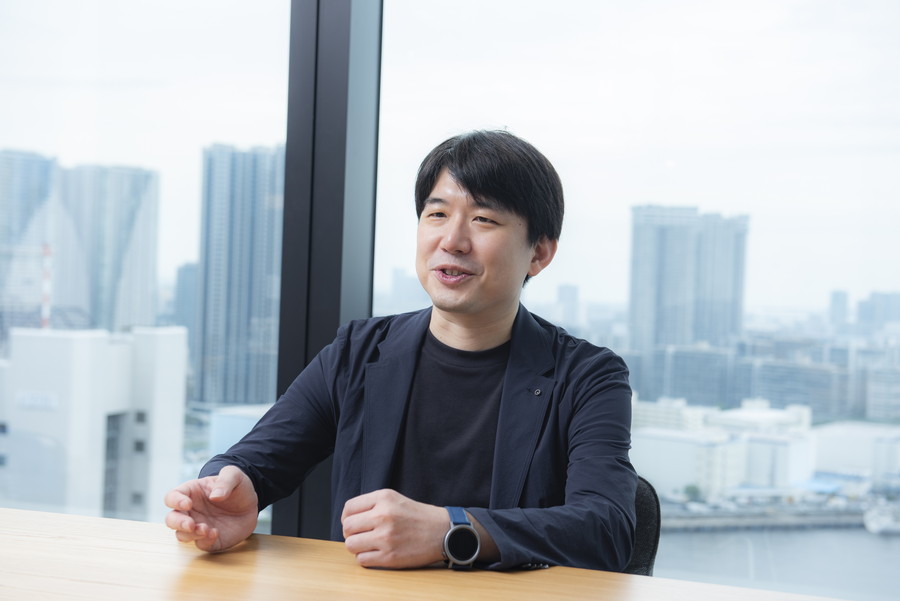
Beyond "technology" lie "people" and "society." The lessons learned at Otemae were the starting point for this.
Of all the things I learned during my university years, my graduation thesis stands out the most. The topic was "Evaluation of the Introduction and Operation of a Remote Learning System." Back then, the environment wasn't like it is today where videos can play smoothly, but I researched how to introduce a new system and how to evaluate its actual operation.
This all started when I was originally interested in e-learning and my professor invited me to participate in his research. I explored how the system would be received and implemented in real-world settings from the perspectives of Psychology and sociology.
Instead of just looking at the technology itself, we should also look at the "people" and "society" behind it. The introduction of new technologies has a significant impact on people's behavior and systems. The awareness that "beyond technology are the people who use it on a daily basis" remains with me even now, and I believe that being mindful of the user's perspective when designing and building systems was cultivated in my university environment.
In my current job, I don't just look at the functions of the system or cloud; I also consider "how its implementation will change the work being done on the ground." For example, if there are unavoidable difficulties due to the cloud's specifications, I honestly explain what is possible and what is not, and then work together to see if we can cover those limitations through operational adjustments. I value thinking about what is best for the customer's specific situation, rather than simply providing a system.
Looking back, the experience I gained as a student learning about the relationship between information technology and society is connected to my current job.
A sense of crisis that "things can't continue like this" opened up the next career path
After graduation, I started my career as an infrastructure engineer.
During my job search, I wanted to work in a field related to e-learning, which was the theme of my graduation thesis, so I applied to education-related companies and the like. However, it was the height of the job market freeze at the time. I couldn't find anything suitable in the Kansai region, so I eventually turned my attention to companies in Tokyo and joined a systems integrator.
However, after joining the company, the e-learning solution I had hoped to work on was just discontinued. I felt lost for about two or three years, wondering, "I joined this company to do this, so what am I going to do now?" Nevertheless, I gained experience as an infrastructure engineer by working on server design and construction for corporate clients.
The turning point came with the spread of cloud computing. Up until then, we had been building infrastructure from scratch, considering server capacity, memory, and so on, but cloud services were drastically changing that. We felt a sense of crisis, thinking, "At this rate, our jobs might become obsolete." So we searched for a company that was involved in cloud services, and that's how we found SoftBank.
I think that back then, I was thinking about "how to respond when something new comes along." Even now, new technologies, including AI, are constantly emerging in the IT industry. When a new technology comes along, the first thing you do is try it out. From there, you explore how you can apply it to your own work. I believe that kind of attitude is important.
I discovered my own unique strengths while surrounded by engineers with science and engineering backgrounds.
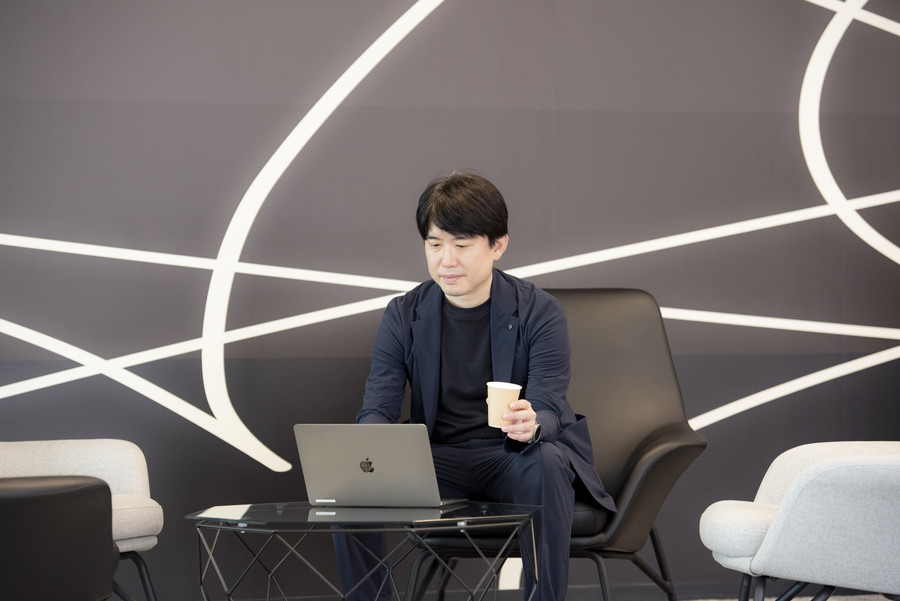
I joined SoftBank in 2011, and there were many engineers around me who had done specialized research in science and engineering fields at university or in graduate school. Working with people who had researched things like "light" or "the flow of traffic information," I sometimes found myself wondering, "What is my own originality?"
That's when I realized that "I have my own unique strengths." As an engineer, I not only pursue specialization, but I can also communicate with sales representatives and customers, explain technical details in an easy-to-understand way, and act as an intermediary to facilitate communication. In the world of engineering, simply using technical jargon isn't enough to get the message across. It's also important to break down complex concepts into easily understandable terms for the customer.
Currently, I'm Manager, managing a team of about 15 people. My main responsibilities include accompanying sales representatives to client meetings to provide technical explanations, acting as a liaison between sales and technical teams, and managing projects.
In doing this kind of work, I feel that the various experiences I had during my university days, such as studying Psychology and sociology, interacting with people in the art club and on the school festival committee, and repeatedly giving presentations, are proving useful in my current job.
Also, when I was a member of the team, I focused on completing the project myself. But now, I'm conscious of "developing people who can do the job even without me." It's not just about achieving results alone, but also about developing people so that the entire team can achieve results together.
And, in recognition of our efforts to date, we were able to receive the "Google Cloud Partner Top Engineer" award for the fourth consecutive year. Learning new technologies, actually using them, and thinking about what kind of value they can bring to our customers—that accumulation of experience has led to my current work.
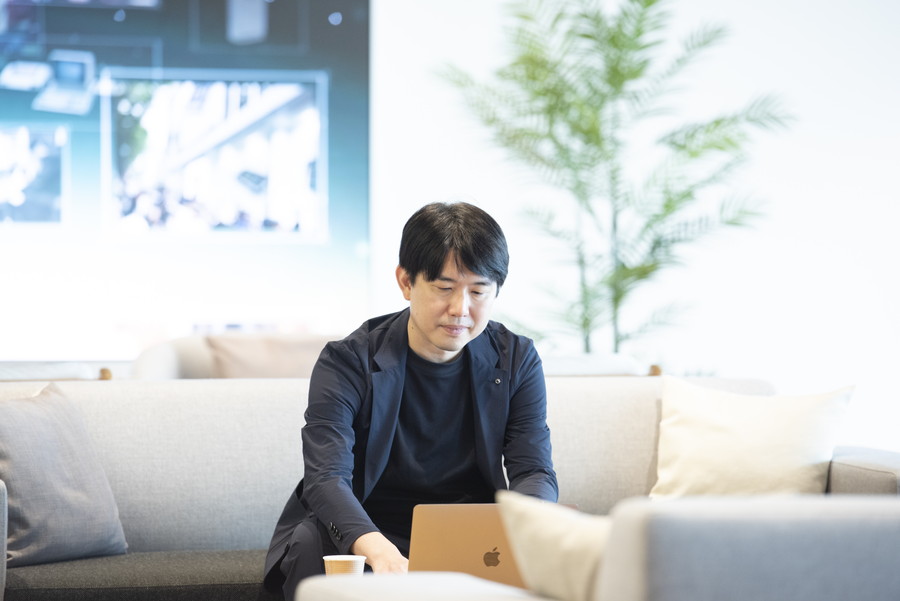
First, try it. Continue learning and think about the value that lies beyond the technology.
The rise of AI will significantly change jobs in the IT industry. However, I don't believe that all jobs will be replaced by AI. The final decision will still be made by "people." That's why what will be needed going forward is the willingness to try out new AI and technologies as soon as they emerge.
During my university years, my professors constantly told me, "Just try it." Those words still resonate with me today.
When you encounter something new, you don't need to look for the right answer right away. Just try it. Then think about it. I myself have gradually expanded my own possibilities in that way.
It's not just about what you study at university, but also what interests you, who you meet, and what experiences you have. Each of these things will, one day, connect to your future in unexpected ways.
I've heard that Otemae University will be establishing a "Faculty of Human Information" in April 2027. When I was a student, there was an environment where we could study Psychology and sociology together, not just information technology. I hear that from now on, we'll be able to learn even more about people, information, technology, and sensibilities in a cross-disciplinary way. Looking at the curriculum, I think, "If I were a student, I would have wanted to go there!" (laughs).
Learning new technologies is certainly important. But I want you to think beyond simply being able to use them; I want you to consider how to utilize those technologies and their output, and what kind of value you can create from them.
The ability to think not just about using tools, but also about "what has changed as a result" and "who has benefited from them," will become increasingly important in the future.
I myself, in line with the spirit of "STUDY FOR LIFE," want to continue learning new things and updating myself to keep up with the times. And just as I researched the introduction and operational evaluation of new systems when I was a student, I now hope to contribute, even in a small way, to addressing the IT industry's talent shortage by focusing on internal talent development and supporting the next generation.
*All information is based on the time of the interview. (October 2026)