

Research activities
Close-up
A place where "unexpected insights" are born - Career Community -
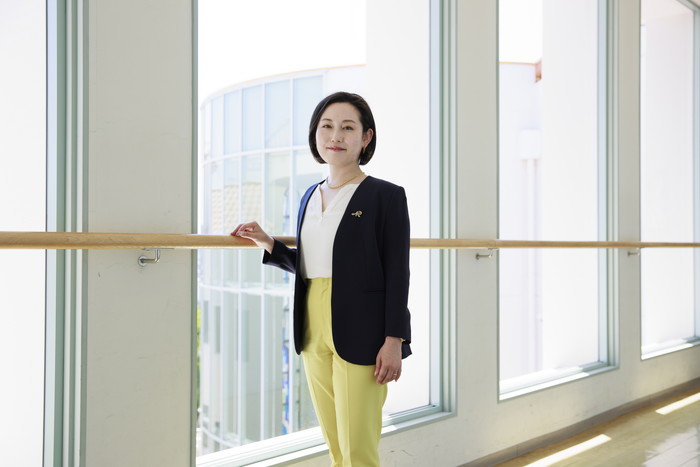
Faculty of Business Administration
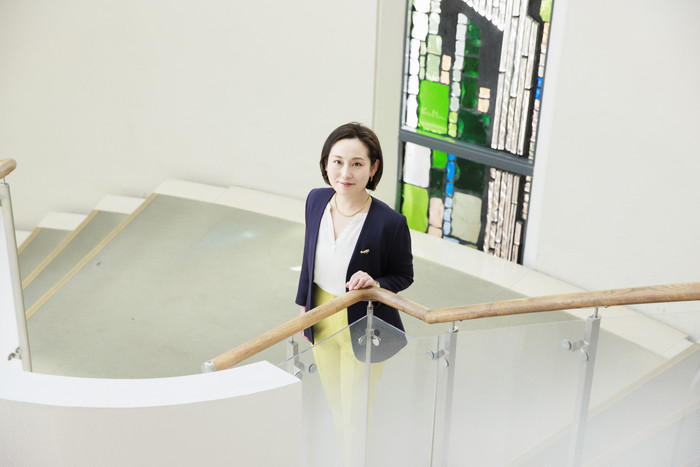
Mami Miyake Lecturer
Research topic: Career and community Career Development Human Resource Management
The appeal of interacting with people from a different perspective than your main job, while still being within an organization.
I previously pursued a career as a marketer at several private companies. At the time, I was proud of my work and firmly believed that "marketing is cool! This is my calling." However, while working at Dyson, an event occurred that profoundly shook my values. It was an experience of participating in volunteer activities with members from other departments, going beyond the scope of my daily work. Working outside the company with people from other departments with whom I wouldn't normally interact, with a common purpose, I realized something. It was the enjoyment of interacting with people from a different perspective than my main job, even while working within a corporate organization, the energy that comes from it, and the change in my perspective on people. By shedding my work role and being exposed to diverse values as an individual, I felt myself revitalized and my perspective broadened. I came to strongly believe that experiences in such "spaces" are the driving force for people to work vibrantly, and that they are extremely important for both organizations and individuals.
"If companies provided opportunities for people to gather and thrive outside of their main job, wouldn't individual potential expand even further?" — This question became the starting point that drove me to research human resources. The "career communities" I research are not simply groups of friends who share hobbies. They refer to spaces for dialogue that transcend organizational boundaries, or even within organizations, transcend business interests, to loosely support each other's career development. In today's rapidly changing era, where there are no easy answers, it is not easy to forge a career on your own. However, if there is a community where "others" can help you view yourself objectively, you can discover a new self and gain the courage to take the next step. My research aims to unravel how such "spaces" transform individual careers and how they support sustainable growth.
Insights into one's own life that arise from the words of others
Through my interviews and research activities to date, I have come to a firm conviction: listening to the lifestyles and work styles of others serves as a mirror that illuminates one's own life. Through the process of listening to others' experiences, people unconsciously superimpose them onto their own lives. I have witnessed numerous instances where, through such dialogues, individuals have discovered clues to their rigid thinking or become aware of previously closed-off options.
A symbolic example is the transformation of retirees participating in a community garden activity. Many retirees have had difficult experiences during their working lives or harbor negative feelings about their careers, wondering, "Was this the right path?" However, I have often witnessed unexpected changes occurring when they gather in the loosely connected space of a garden and interact with people from diverse backgrounds. For example, casual affirmations from others, such as "You're good at summarizing things" or "Your advice is spot-on and helpful," and receiving feedback from different perspectives, can help them re-evaluate their past selves positively, realizing, "The experience and skills I've cultivated so far weren't wasted at all. In fact, this life isn't so bad!"
This is the process of reinterpreting negative past memories into positive ones, and it is a moment when a person's life is elevated to a "rewarding experience." This recovery and reconstruction of self-esteem is an extremely important element in career support.
So, how should this be implemented within corporate organizations? Modern companies need not only "rigid organizations" that demand productivity and efficiency, but also spaces that allow for these "looser relationships." For example, this could involve intentionally designing opportunities for internal side jobs, project-based communities, or cross-organizational learning with external partners. By creating an environment where people can engage in dialogue as individuals, without direct consideration of evaluation or vested interests, employees can think about their careers autonomously and enhance their resilience. We believe that strategically incorporating such "career communities" within companies directly contributes not only to individual well-being but also to the sustainability of the organization.
Find colleagues who help create the "right answer" and discover the core of your own unique career.
In modern society, there isn't just one definition of a "good career." I believe that there isn't a single, perfect "good career" somewhere; rather, you have to make your own choices the "right" ones in retrospect. And a career community is a place where you can find like-minded people who affirm your current choices and situation, and who will help you make them the right ones.
The fascinating thing about career communities is that they are not entirely "designable." Even without actively speaking up or striving to achieve something, simply being there and listening to others can unexpectedly bring about insights you never would have imagined. These "unexpected insights" are what make life so interesting, but at the same time, they represent a complexity that cannot be explained solely by logic.
To discover your true "core," interaction with others is actually essential. Introspection alone will inevitably prevent you from breaking free from existing frameworks. It is only through "loose connections" with others, by relativizing yourself and incorporating diverse perspectives, that the outline of your own unique career will begin to emerge.
Looking ahead, I want to continue exploring how to implement spaces with this kind of "intentional looseness" within corporate organizations and local communities. Even in organizations that prioritize efficiency, I want to aim for a society where individual creativity and happiness can coexist by deliberately creating "playfulness" and "space for flexibility." That is my challenge.
I'd like to suggest an action you can take starting today. Instead of trying to force yourself to change, try putting yourself in a place where there are people with different perspectives. You don't have to speak. Just start by simply observing or listening. This could be an external seminar, local volunteer work, or even an online hobby group. That small step could be the gateway to an important solution that you'll look back on years from now and think, "That was a turning point."
Author
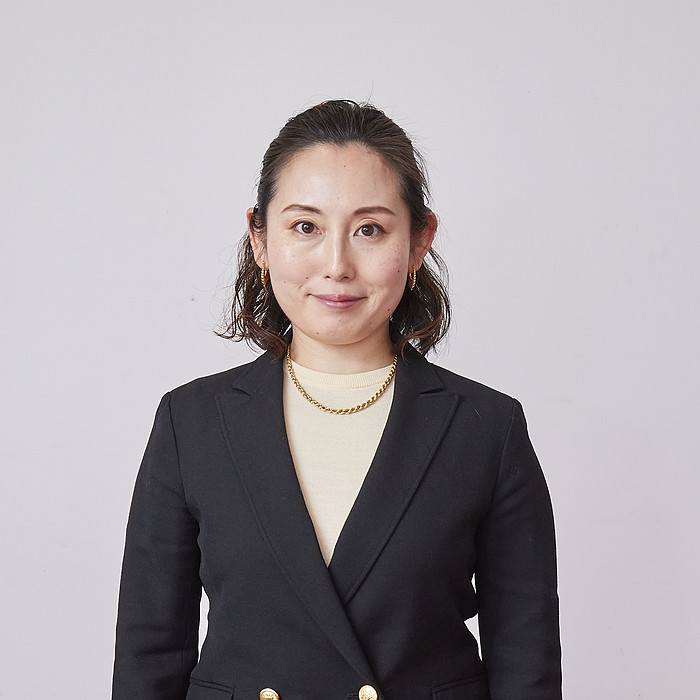
Mami Miyake Mami MIYAKE
Faculty of Business Administration
Lecturer
Research Field
Economics, Management, and Commerce
Research Topics
Career Community Career Development Human Resource Management