

Research activities
Close-up
Financial networks and town administration in the Edo period: Reflections on local communities from Itami-gocho.
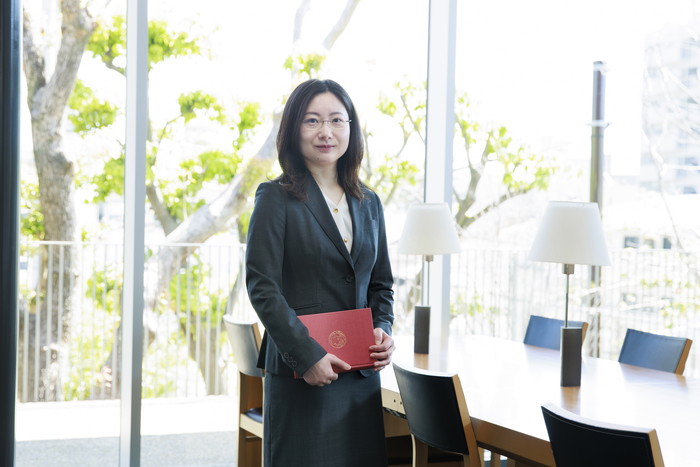
Faculty of Intercultural Japanese Studies Graduate School of Graduate School of Comparative Culture
Akie Kato Lecturer
Research topic: Early modern Japanese history
Unraveling Edo-period towns from a financial perspective
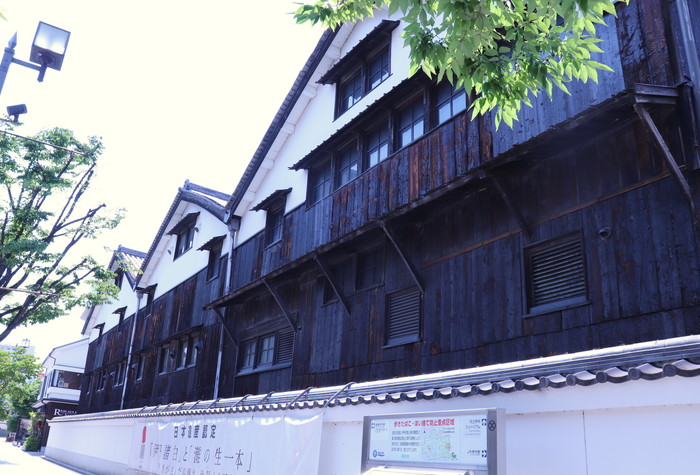
This research focuses on Itami-go Town in Kawabe District, Settsu Province during the Edo period (present-day Itami City, Hyogo Prefecture), examining the town's administration by town officials, the nature of finance within that administration, and their relationship to the feudal lord's rule. Itami-go Town prospered through the sake brewing industry during the Edo period, and the town officials, known as the Sōshukuro, who were responsible for town administration, were selected from among the sake brewers. The feudal lord of Itami-go Town was the Konoe family, a noble family, from 1661 until the abolition of the feudal domains in 1871. The Sōshukuro were entrusted with general town administration on behalf of the feudal lord, who was not permanently stationed in Itami-go Town, and the town's administrative organization included a position called the Okinagata, who specialized in financial affairs. It has been pointed out that a distinctive feature of Itami-go Town was that financial activities were carried out throughout the town, centered around the Sōshukuro and Okinagata.
Upon entering university, I studied Japanese History and also developed an interest in economics and finance, and I wanted to research the Edo period from these perspectives. During my undergraduate years, the Lehman Shock occurred in 2008, which made me even more keen to historically examine the nature of lending and borrowing money and the true nature of credit in monetary transactions. In Itami-gocho, the Konishi Shin'emon family (now Konishi Sake Brewery Co., Ltd.), who served as the chief retainer and financial officer, possessed a wealth of financial documents, and with the encouragement of my advisor, I thought it would be possible to concretely clarify the state of finance in Edo-period towns. I began my research on Itami-gocho for my graduation thesis, starting by reconstructing the duties of the financial officer one by one from the historical documents.

While there have been previous studies on the chief administrator and financial officer of Itami town, those studies, particularly regarding the financial officer, have remained largely general. Therefore, this study aims to clarify the duties of town officials, including the chief administrator and financial officer, the lending of funds from the lord Konoe family to townspeople, primarily sake brewers, and the formation and accumulation of financial resources managed by the financial officer. By doing so, we have examined the actual state of town management and its relationship to lordly rule, primarily from the perspective of financial activities.
The unexpected tasks undertaken by town officials, the driving force behind the town's operations.
In the Edo period, the town of Itami was governed by town officials, including the chief elder (Sōshukuro), town headman (Machishōya), and town elders (Machitoshiyori). A work diary from around 1840 reveals that the main duties of the chief elder and others were to handle lawsuits that arose within Itami town. They also received reports of runaways and petitions from townspeople, and, if necessary, sought instructions from the local magistrate of the Konoe family. Although the lord had delegated duties to the town officials, the chief elder and others were able to manage the town autonomously.
Meanwhile, town officials were also required to work for the lord Konoe family. In 1843, there was a man named Ban Zen'emon who served as the town's village headman. That year, the Edo shogunate announced a policy (known as "Jōchi") to annex all private territories, such as those of daimyo and hatamoto, within a 10-ri (approximately 40 km) radius of Edo and Osaka. Since Itami-go-machi was included within the 10-ri radius of Osaka, the Konoe family tried to investigate whether Itami-go-machi would also be subject to Jōchi. At this time, the Ban family, who had connections with the Osaka Castle Warden, a key position in the shogunate, were asked by the Konoe family to inquire with the Osaka Castle Warden about Jōchi as needed. The reasoning was that it was not considered good for the lord himself to act openly, so the lord tried to utilize Ban Zen'emon's connections.
Furthermore, Ban Zen'emon also had the role of traveling to Edo to apply to the shogunate for a nominal loan to the Konoe family and an increase in the amount of rice allowed for sake brewing in Itami village. A nominal loan refers to a loan of funds from nobles or temples under a specific pretext, which was permitted by the shogunate and offered protection for the debt. In addition, during the Edo period, sake brewing was permitted only to sake brewers who were given a business license called a "kabufuda," and each license had a set limit on the amount of raw rice that could be used. The increase in the amount of rice allowed for sake brewing was an important application not only for the sake brewers of Itami village but also for the Konoe family, as it would strengthen their own financial base. It is thought that the Ban family's connections with shogunate officials were also expected to be valuable in these applications.
Subsequently, in 1846, Ban Zen'emon was appointed to the position of Sōshukuro (chief elder) by the Konoe family. Since Ban Zen'emon was not a sake brewer, he could not hold the position of Sōshukuro, which could only be held by members of certain sake brewing families, and was instead given a position equivalent to Sōshukuro. Ban Zen'emon's appointment to the position of Sōshukuro was due to his diligent work in town administration related to the Osaka Town Magistrate's Office and in lending operations within Itami town, as well as a shortage of Sōshukuro personnel. However, considering the relationship between town officials and the ruling Konoe family, and the network of contacts and negotiation skills that town officials possess, this is an important case for examining the capabilities of town officials to work beneficially for both the lord and the town.
Looking ahead to the future of the economy, governance, and local communities—A depiction of the dynamism of the early modern period from Itami-gocho—
The daily duties of officials such as the chief elder were determined by the nature of the lord's rule, and one of its distinguishing features was that their ability to carry out town administration enabled autonomous town management. Furthermore, the fact that sake brewing was the town's core industry had a significant impact, and the system of chief elders, in which only sake brewers could be appointed to the highest position in the town's administrative organization, meant that Itami-go town was run primarily by sake brewers. While hereditary succession of town officials is not uncommon, a town or city where only sake brewers can be appointed to certain town official positions is a unique case. By examining the economic and political roles that the lord expected of sake brewers, and the impact that town management carried out by townspeople with specific occupations had on cities, we believe we can paint a more concrete historical picture of how local industry and economy relate to urban management and lordly rule.
One of the great attractions of local history research is the ability to depict the historical development of social transformation from the perspective of the local community. The promotion of town headman Tomo Zen'emon to the rank of chief resident, mentioned earlier, can be seen as a transformation of the local community that occurred in an attempt to cope with new problems in the late Edo period. Similar trends in local administration during the same period can be seen in other regions, but historically situating events while considering the influence of the economic and social structure of Itami town, its town administration system, and the unique characteristics of feudal rule is a fascinating, albeit challenging, task as research progresses.
Regional history research not only delves deeply into the history of a specific region to reveal its unique and distinctive characteristics, but also provides a foothold for revealing the universality of historical events by broadly examining early modern society as a whole. In the future, I would like to clarify the relationship between the sake brewing business of the chief retainer and the financial activities of the Konoe family, the feudal lords, within the town of Itami, and explore how the economic activities of merchants and industrialists transformed the lord's finances and urban management.


Author
Akie Kato Akie Kato
Faculty of Intercultural Japanese Studies Graduate School of Graduate School of Comparative Culture
Lecturer
Research Field
History, World History, Cultural History, Geography
Research Topics
Early Modern Japanese History