

Research activities
Close-up
Building the future from a seaside town - From an encounter with "living Architecture" to the practical application of pre-disaster recovery -
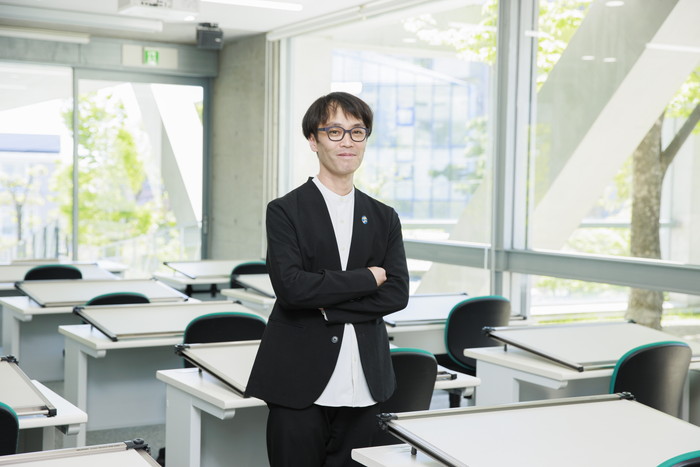
Faculty of Architecture & Arts Graduate School of Graduate School of Comparative Culture
Motoki Shimoda Associate Professor
Research topic: Interior Design Architecture Design Spatial Design
A student aspiring to Architecture encounters "living Architecture" in a fishing village he visits by chance.
My starting point lies in the realization that "Architecture is not just about creating individual buildings, but about designing the relationship between life and the community." During my student days, I aspired to be an Architecture, pursuing innovative designs and beautiful forms. I admired works that were featured in Architecture magazines and had a strong interest in the act of "creating" Architecture itself. However, one day, when I visited a small fishing village in Wakayama Prefecture, my values were greatly shaken. The landscape created by houses piled up along the slope, the sea suddenly appearing at the end of narrow, winding alleys, the unique Architecture forms of the region where livelihoods and homes were integrated. There, I found not Architecture designed by famous Architecture, but "Architecture" that had been formed over many years by the accumulation of people's lives. It was an encounter with "living Architecture" that could not be fully grasped by drawings alone, architecture that had the activities of people etched into it.
At that moment, I began to think not "I want to become an Architecture who designs buildings," but rather "I want to learn Architecture that interprets the region itself and connects it to the future." I felt like I had made a resolution to live my life in a way that viewed Architecture not as a standalone work, but as something that understood in relation to people's lives, the local climate, history, and Architecture.
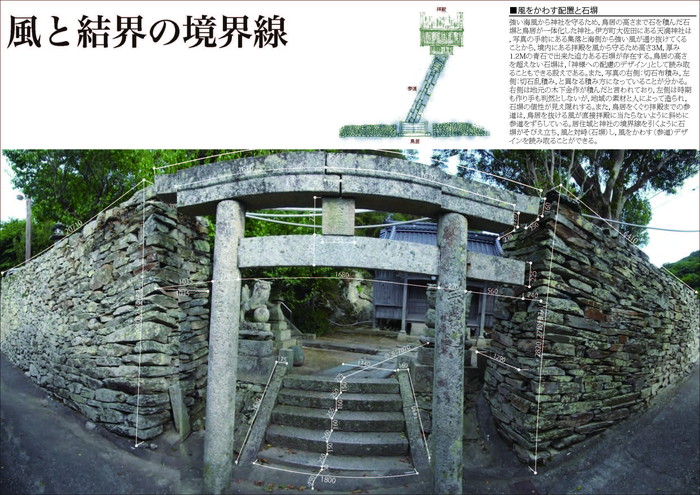
Since then, I have visited over 400 coastal towns across Japan, continuing my research from the perspectives of Architecture, urban planning, and community development. Coastal towns are extremely complex spaces formed by the interplay of topography, industry, beliefs, and community structures. Even the orientation of a house reflects the flow of daily life and responses to seasonal winds, and the shapes of alleys and stone walls embody the wisdom of life accumulated over many years. While deciphering the "context of daily life" behind such spaces, I am exploring ways to pass on the unique values of each region to the future.
Furthermore, coastal towns offer extremely insightful fields for studying Architecture design. The spaces, shaped in response to the local climate, topography, materials, and lifestyles, embody design principles that are still relevant to modern Architecture. You can learn how to consider Architecture from a local perspective and how to create spaces rooted in the community. Moreover, in recent years, renovations and conversions utilizing vacant houses resulting from population decline and aging have progressed, and old houses are being reborn as cafes and guesthouses, becoming a stage for creating new value. Coastal towns are places that inherit history and culture, and at the same time, they are the forefront of experimenting with the possibilities of future Architecture and urban development. For me, Architecture is about discovering the value hidden within a region and translating its charm into the future.
A Challenge in a Seaside Town - Pre-Reconstruction for Taking Responsibility for the Future -
The Great East Japan Earthquake of March 11, 2011, was an event that drastically changed my perspective on Architecture and its relationship to local communities. Until then, I had been fascinated by the beauty and unique spatial structure of coastal towns, and I had devoted myself to describing and interpreting their value. However, when I witnessed firsthand the reality of towns being wiped out in an instant by the tsunami, and the loss of people's lives and livelihoods, I keenly felt that "simply talking about the value of a region is not enough to protect it." If I am going to research coastal towns, I must also take responsibility for their future. With this in mind, I shifted my focus to the practice of "planning for reconstruction in advance."
What I consider pre-disaster recovery is not about creating a recovery plan after a disaster has occurred. Rather, it's about re-examining the region's attractions and challenges before a disaster strikes, and preparing while sharing with local people what they want to protect in this region and what kind of lifestyle they want to pass on to future generations. In other words, I see it not as a plan for recovery, but as an effort to cultivate a region that can recover.
In recent years, we have been engaged in research and practical application of "pre-disaster reconstruction town planning" in anticipation of the Nankai Trough earthquake. This is an attempt to prepare for the future by re-examining local spatial resources and people's relationships before a disaster strikes, rather than waiting for reconstruction to occur afterward. One example of this practice is the activities we have been continuing in Kuki-cho, Owase City, Mie Prefecture.
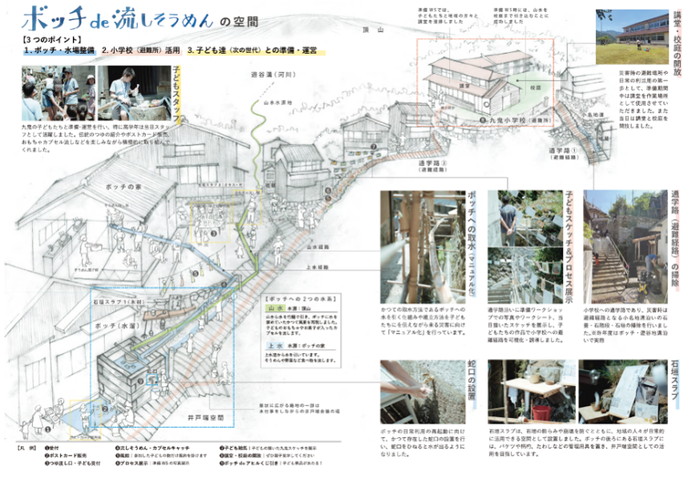
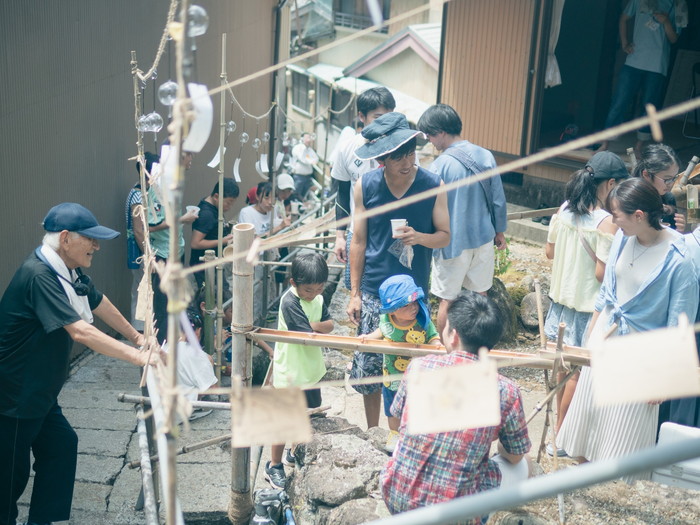
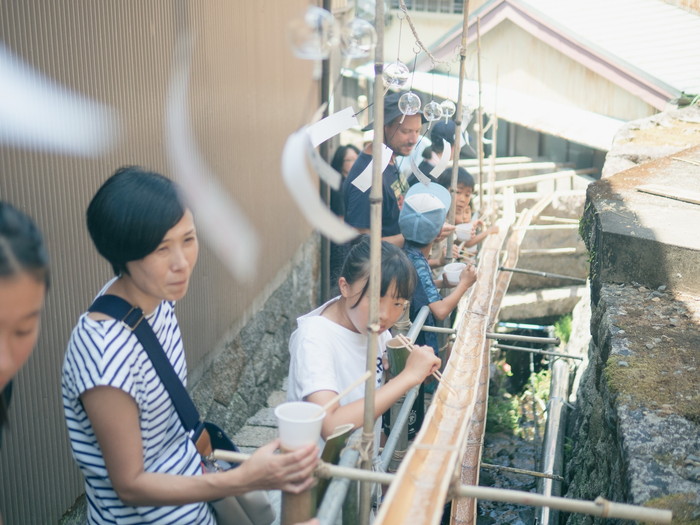
Kuki Town is a small coastal town with a population of about 400 people, but it is an area where damage from a Nankai Trough earthquake is a concern, as tsunami inundation zones and hillside settlements overlap in a complex manner. Together with the residents, we have been working on creating a pre-disaster recovery plan focusing on themes such as utilizing vacant houses, considering evacuation sites, and securing water. One of the activities that emerged from this process is "Bocchi de Nagashi Somen" (eating nagashi somen noodles alone).
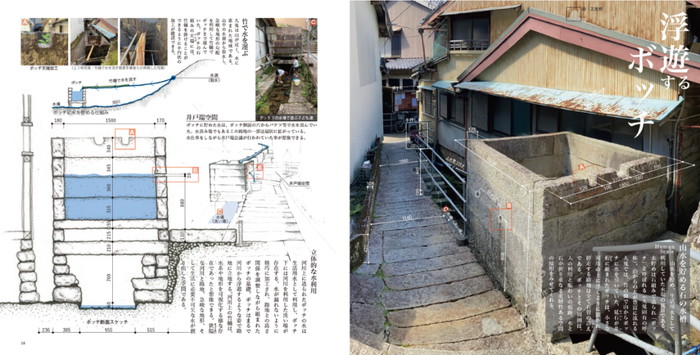
A "bocchi" is a stone-built water tank that was once used to store water for daily life. Many of these tanks are no longer in use, but we have created a system that brings water back to this remaining water resource in the community and allows for the serving of nagashi somen (flowing noodles), making it both a place for community enjoyment and a training ground for water intake in case of disaster. Together with local children, we proactively cut bamboo, built pipes, let the water flow, and finally carried the water in a bucket brigade to the evacuation center. Through this series of experiences, we realized that disaster preparedness is not something to be learned as knowledge, but something to be learned through physical experience and passed down as a community memory.
I believe that a reconstruction plan is not something that can be made up solely of blueprints and systems, but rather something that weaves preparation for the extraordinary into the enjoyment of everyday life. As the population declines and the population ages, securing people to support the region is a major challenge, but that is precisely why it is important to rediscover the resources lying dormant in the region and continue to nurture relationships between people. For me, research by the sea is not about documenting disappearing landscapes. It is about deciphering the wisdom, culture, and strength of community that breathe life into them and translating them back into society for the future. Coastal towns are the starting point for Architecture and urban development, and at the same time, a field that continues to question the essence of human life.
To share the practices cultivated in Kuki with the whole country, and to protect the daily life of the community across generations.
One of the core principles we value in Kuki is "thinking about plans that the government cannot implement." When we talk about disaster preparedness, attention tends to focus on visible measures such as seawalls, evacuation facilities, and hazard maps. However, what truly supports a community are the connections between people that have been cultivated through daily life—knowing who is in charge of preparing for festivals, who to turn to in times of need, and which houses still have usable wells. We believe that these invisible relationships are the most important foundation for pre-disaster recovery.
Therefore, in our activities at Kuki, we deliberately do not set clear goals. Rather than having a plan of "what to achieve by what date," we prioritize accumulating small practices and fostering relationships between people in the process.
"Eating Nagashi Somen Noodles Alone" is one such example. At first glance, it appears to be a fun local summer event, but behind it lies an activity that involves learning about the existence of water sources, checking the flow of water, maintaining local tools, and sharing knowledge and experience across generations. Elements of disaster prevention and community preservation are naturally incorporated into activities that appear to be playful.
In Architecture and urban planning, I believe it's crucial to consider not only the "visible forms" like buildings and facilities, but also how to pass on the "invisible forms"—such as people's memories, culture, and relationships of mutual support—to the future. The strength of a community isn't necessarily born solely from magnificent facilities; it's supported by the accumulation of trust and experience nurtured in everyday life.
Going forward, we hope to expand the practices we have cultivated in Kuki to coastal areas and regions experiencing population decline throughout Japan. With disaster risks and the shrinking of local communities becoming challenges not only in the event of a Nankai Trough earthquake, pre-disaster recovery is not a theme limited to specific regions. The first step should be for each of us to consider "what landscapes we want to leave for the future" and "what kind of lifestyle we want to pass on to the next generation" in the towns and cities where we live.
The driving force behind our continued research and practice lies in the richness and resilience of human life that we learn from our coastal town. What the future needs is not just grand ideals or epic plans. We believe it is the imagination to carefully reconnect the everyday lives of the community and discover new possibilities through that accumulation.
Author
Motoki Shimoda SHIMODA Motoki
Faculty of Architecture & Arts Graduate School of Graduate School of Comparative Culture
Associate Professor
Research Field
Science, Engineering, Architecture
Research Topics
Interior and Spatial Design Architecture Design Spatial Design