

News & Press Releases
[Faculty of Modern Social Studies] Project-Based Learning (PBL) class conducted by Yasuhiro Nakamachi of the certified NPO "Sodateage Net Connections Osaka"
2026.06.05
- notice
- Undergraduate and Graduate School
- Faculty of Modern Social Studies
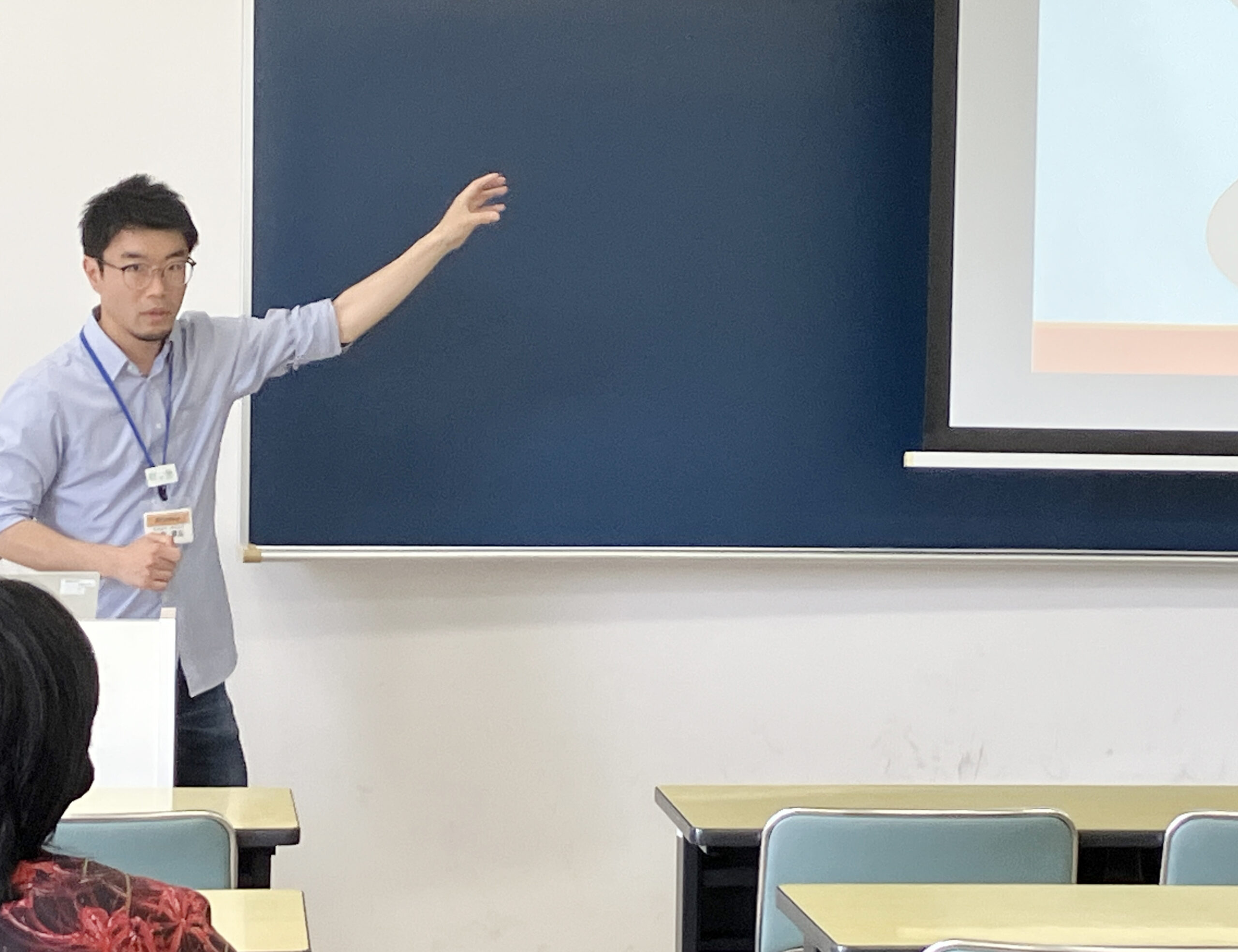
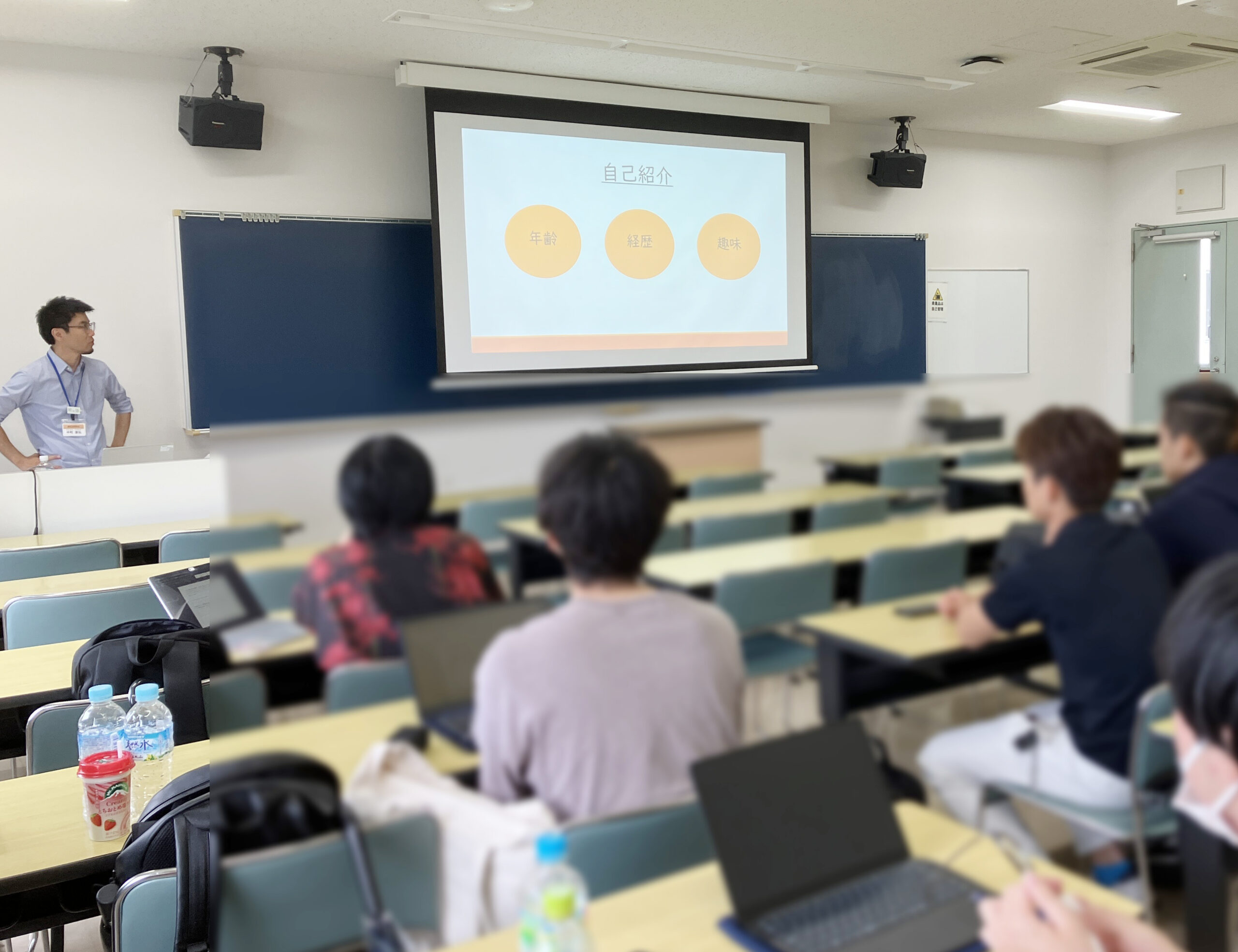

On May 27th, Mr. Yasuhiro Nakamachi, business advisor at the certified NPO Sodateage Net Connections Osaka, was invited as a guest Lecturer to the "Media Media and Sociology Social Design Workshop I" course (taught by Associate Professor Yasutaka Ito) in Faculty of Modern Social Studies and Sociology, Faculty of Contemporary Society, to give a lecture on the theme of "Employment Support for Young People."
This course is a final practical exercise course for obtaining the "Social Researcher" qualification certified by the Japan Association for Social Research. You will put into practice the entire process of social research, utilizing the social research skills you have learned in lectures.
This academic year, we will be addressing the issue of "social exclusion and inclusion" in the Hanshin region where our university is located, through a project-based learning (PBL) type course. As part of this, we invited Mr. Nakamachi, who focuses on youth employment support, to speak at our event.
The lecture introduced initiatives by "Connections Osaka," which provides support for young people's employment and independence, as well as preventative measures to prevent youth isolation, such as "on-campus safe spaces" and "youth centers."
One particularly important perspective presented was the "iceberg model," which suggests that the reasons why young people are "not working" are often hidden behind poverty or past setbacks that prevent them from working. Ms. Nakamachi emphasized that a system of support from society as a whole is necessary, rather than relying on the idea of individual responsibility. She also stated that "independence" is not about "living by one's own power," but about "being able to rely on others when needed."
Many students commented that the lectures significantly changed their values, saying things like, "I realized that there are reasons why people are 'unable to work,' not just 'not working,' and that you shouldn't judge by appearances," and "My previous idea of independence as 'acting solely on one's own' is outdated, and it was a new discovery that relying on others when needed is what independence is all about." It was evident that the students were re-examining social issues from a deeper and more multifaceted perspective.
Many students also expressed that they learned about the fact that "1 in 17" young people have difficulty finding work, and that they realized the difficulty of "discovering" and "guiding" those who need support. As clues to solutions, they gained concrete insights such as, "I thought that people would naturally gather at support organizations, but I realized that it is important to create an environment where people want to go themselves," "Instead of unilaterally giving instructions, it is important to respect the other person's opinion first and to be supportive," and "I learned that games, which I thought were just entertainment, can be a catalyst for communication and can change lives." Some students took this lecture as a catalyst to consider social issues as their own and actually became interested in volunteer activities, making it a very meaningful learning opportunity for their next research.
In this spring semester course, we will prepare and plan a social survey. Building on this, in the fall semester's "Media and Social Design Workshop II," we will conduct fieldwork in real-world settings and interviews with supporters, aiming to complete a research report through data analysis and consideration.
(Source: Faculty of Modern Social Studies)