Music Video
  • HOME
  • News & Press Releases
  • [Faculty of Health and Nutrition] Learning expands through practical classes! "Biochemistry Experiment II" undertaken by third-year students aiming to become registered dietitians.

News & Press Releases

[Faculty of Health and Nutrition] Learning expands through practical classes! "Biochemistry Experiment II" undertaken by third-year students aiming to become registered dietitians.

2026.06.29

others
  • Faculty of Health and Nutrition
We are carefully separating the components of the egg white while checking the procedure.
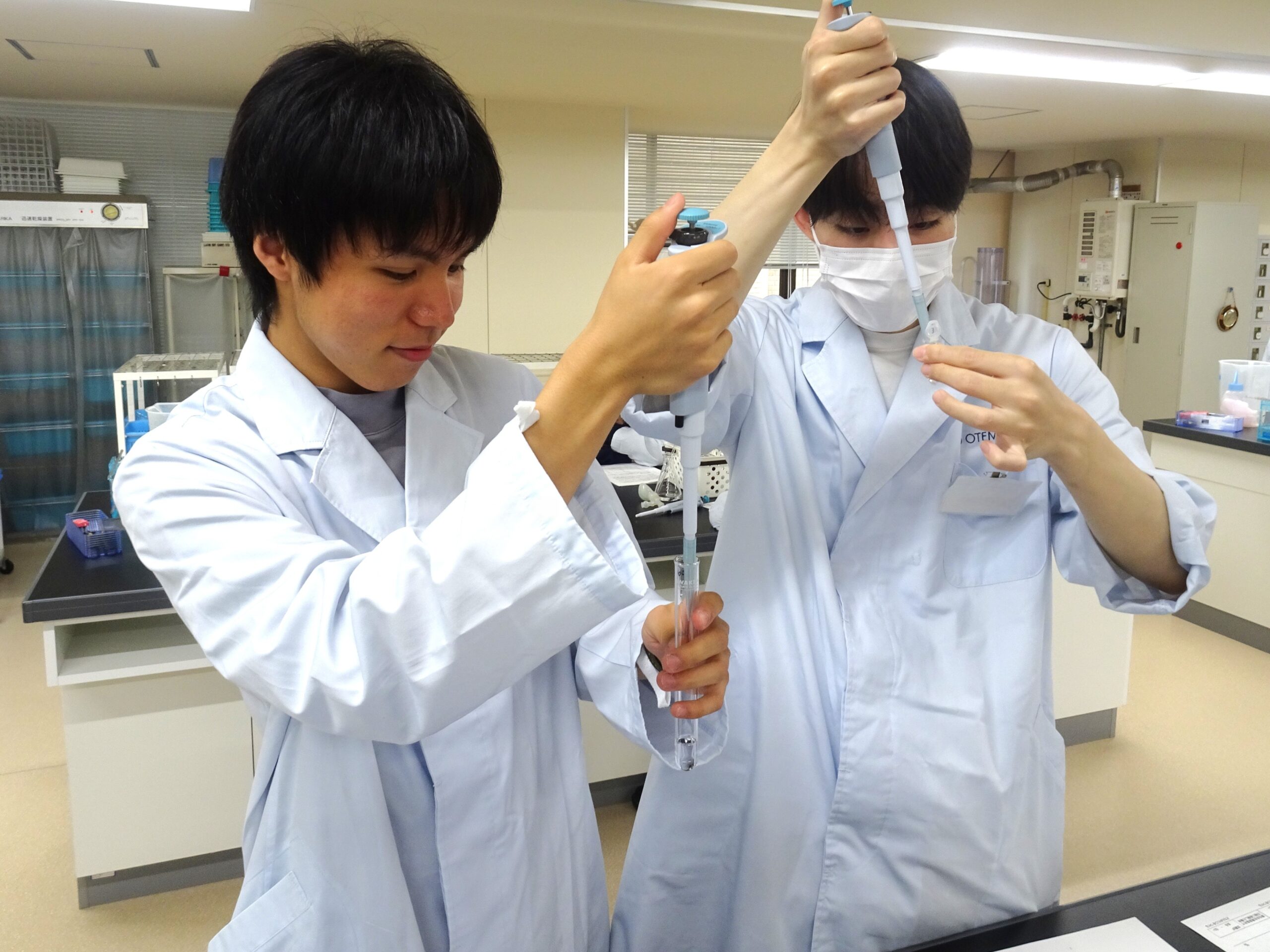
We accurately handle minute amounts of solution, less than 1 mL, and measure the amount of protein.
We are carefully separating the components of the egg white while checking the procedure.
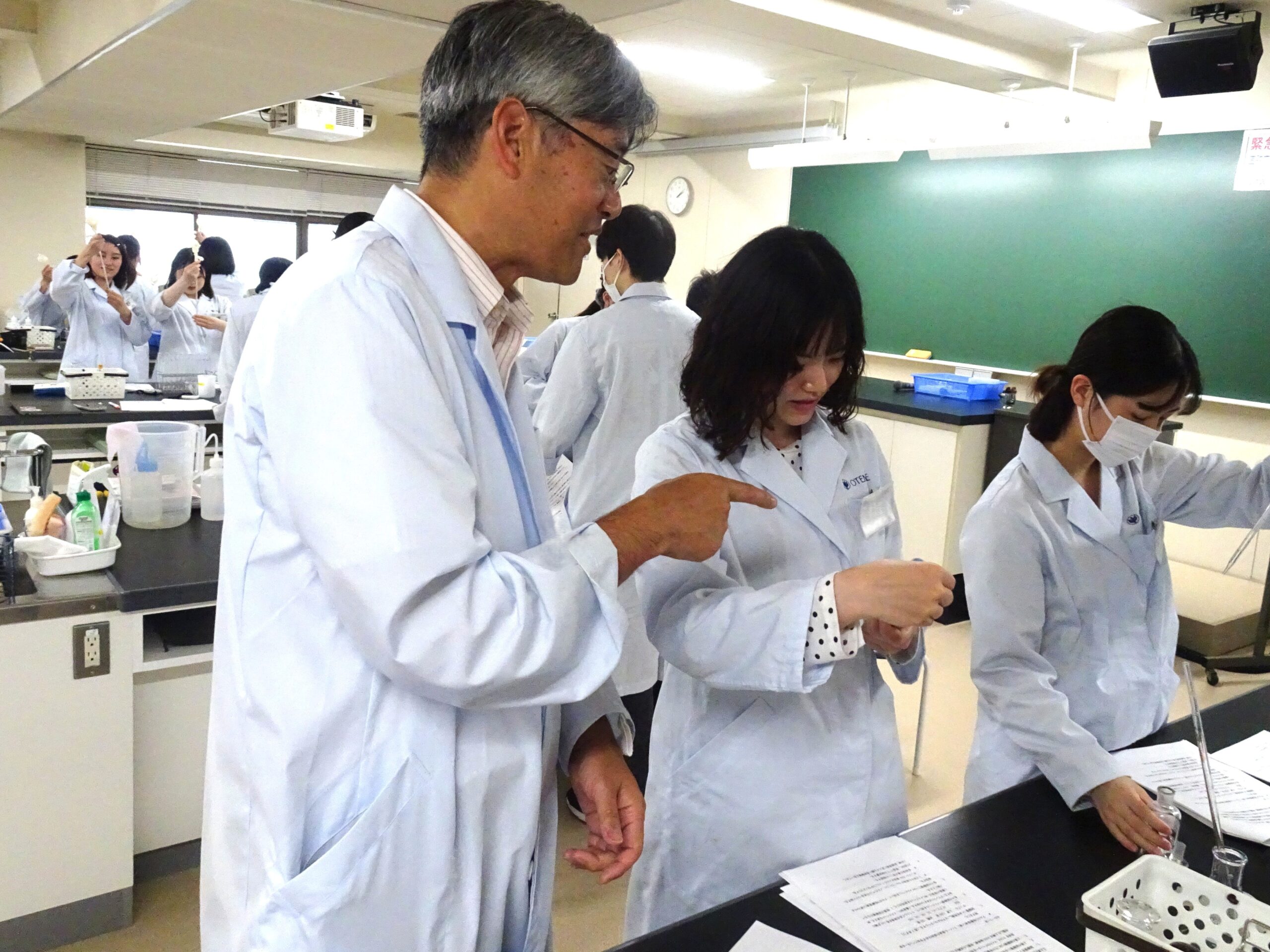
During the experiment, the supervising teacher or Research Associate will be on hand to monitor you, so you can perform even unfamiliar operations safely and with peace of mind.

As the semester nears its end, third-year students in Faculty of Health and Nutrition are tackling more specialized topics in their "Biochemistry Experiment II" course, applying the skills they've acquired so far. This time, as a culmination of their studies, they conducted an experiment on the theme of "protein separation and purification."

Proteins are essential nutrients that play vital roles in the body and are found in many foods. In reality, they exist in a mixture of several types, and in this experiment, we separated them by utilizing the differences in their properties and learned about their functions.


Let's try separating the proteins contained in egg whites!
In the experiment, we used egg whites, a common food item, and extracted a protein called "egg white globulin" by taking advantage of the difference in their solubility, and then measured its quantity.


Further purification using column chromatography!
Furthermore, we also explored a method called "column chromatography." This method utilizes the differences in the speed at which substances move, allowing us to collect small amounts of the flowing liquid while considering where the desired protein is located during the experiment.


The skills that students aiming to become registered dietitianscan gain through experiments!

Through these experiments, students can personally verify invisible components. Furthermore, learning about the components and functions of everyday foods through hands-on experience will lead to the knowledge necessary for future registered dietitians. In class, third-year students demonstrated proactive engagement, and the laboratory was filled with both calmness and energy.


Furthermore, the discoveries and learning gained through these classes in Faculty of Health and Nutrition will contribute to your ability to support people through "food" and "health" in the future.
Currently, through this learning experience, students are discovering "how nutrition can make people happy" and"what they can do for society." We encourage you to come and see these students and experience the atmosphere of their daily learning at our open campus. You're sure to feel the breadth and appeal of learning related to "food" and "health."

(Source: Laboratory of Food and Nutrition)