News & Press Releases
[Faculty of Business Administration] Lecture by Ms. Emi Hidaka of Fujiya Co., Ltd.
2026.10.28
- notice
- Faculty of Business Administration
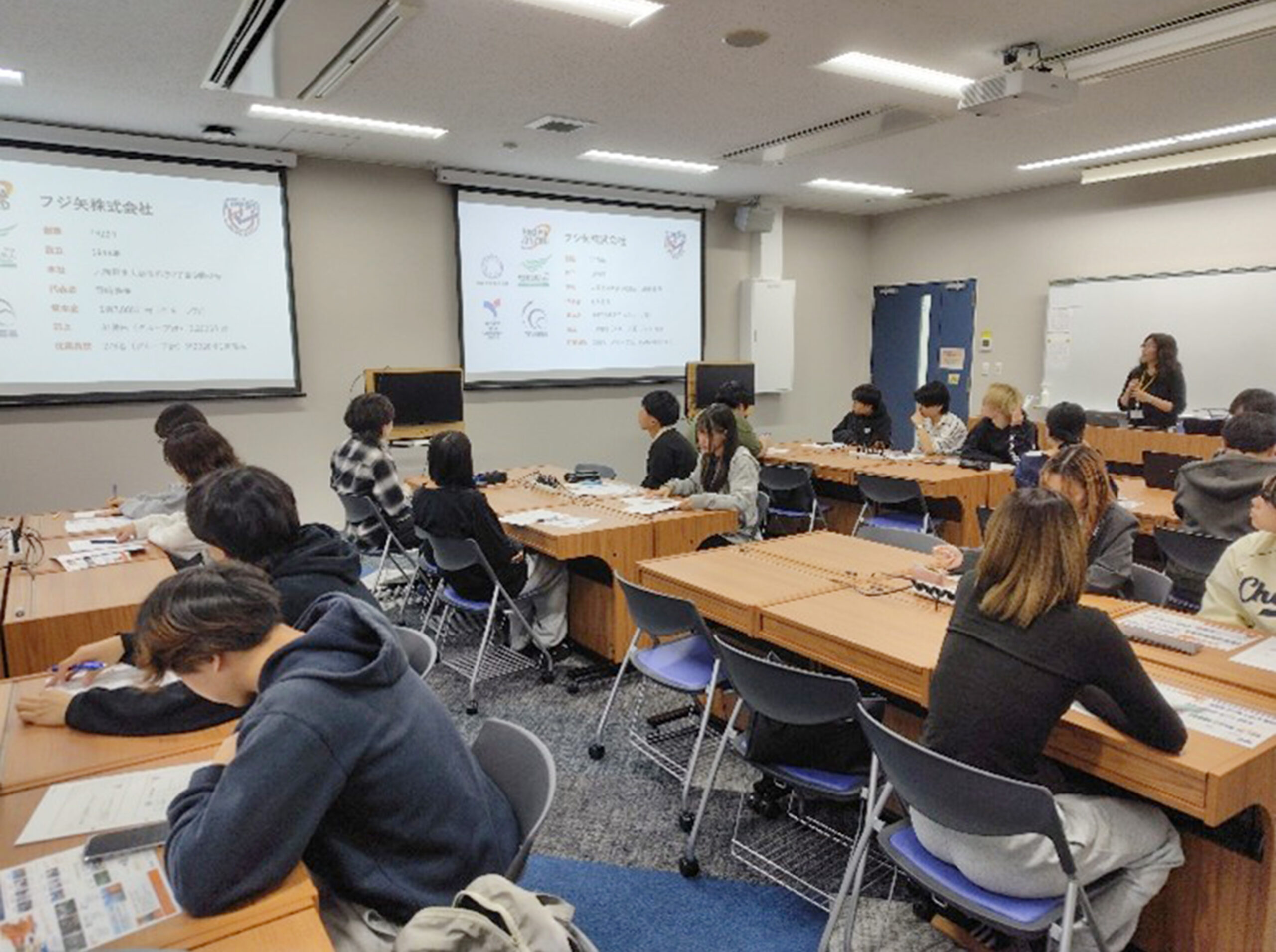
Faculty of Business Administration 's "Practical Exercise (Accounting I)" (Instructor: Izumi Yamazaki Professor) provides hands-on learning about computer-based accounting work. This time, we welcomed Emi Hidaka, Executive Director Officer and Director of Accounting and Director of Women's Empowerment at Fujiya Co., Ltd., as a guest speaker on the theme "Accounting as a Job and the Career of Working as a Career."
Fujiya Co., Ltd. is a long-established manufacturing company founded in 1923. They are well-known for their pliers and nippers, and are committed to both performance and design in their manufacturing. They are a global company with offices overseas.
Ms. Hidaka taught us how the commercial and industrial bookkeeping knowledge we learned in class is applied in actual accounting practice within companies, and what kind of work accounting entails. In textbooks, "bookkeeping" is presented with transaction details in the problem statement, and there is a correct answer. However, in the real world, you need to judge for yourself "what kind of transaction this is" and "what it means" based on invoices, delivery slips, contracts, and bank statements, and make the appropriate journal entries. We were shown real invoices, and it was explained how multiple transactions, such as those classified as cost of goods sold and those classified as expenses, can be mixed together on a single invoice. The greatest role of accounting can be said to be "management control." It provides management with the information necessary to correctly assess the current situation and make decisions for the future. Supporting management with numbers—that is the job of accounting.
Ms. Hidaka said that she built her current career by valuing "learning, honesty, and altruism." She encouraged people not to limit their own potential by thinking "I can't do it," but to try first, and that qualifications and knowledge will increase their future options, so she urged them to actively learn and challenge themselves in various ways.
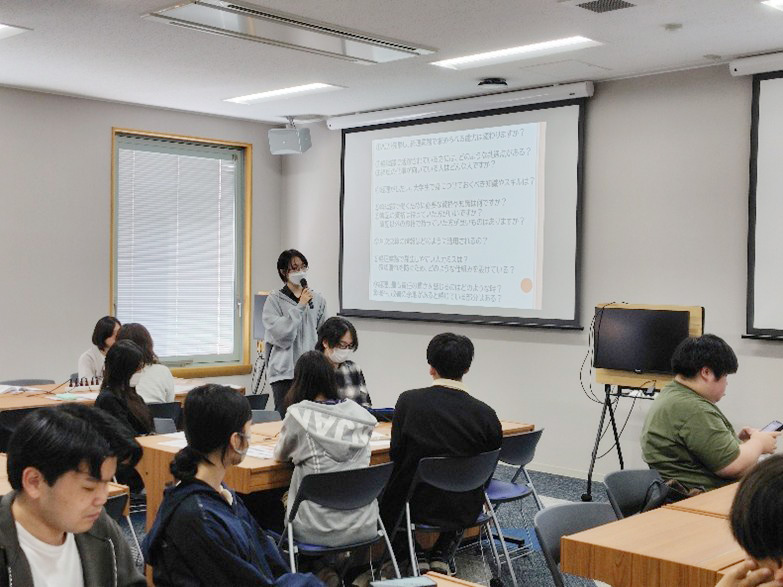
Here are some comments from the participating students.
I heard a story about how the bookkeeping qualification she obtained in high school gave her the push she needed to return to work in accounting, and it made me realize that it's a good idea to get qualifications when you have the chance.
I was particularly impressed by the story about visiting the subsidiary in Vietnam and building trust with the Vietnamese female employees working there. By acknowledging and encouraging their efforts, they grew and became able to submit necessary data more quickly. As a Vietnamese person myself, I was happy to hear about Vietnamese people working and thriving in Japanese companies.
I had never considered during class why there are different types of profit. Hearing that the type of profit that people want to know differs depending on their perspective when looking at financial statements made me feel like my understanding of accounting had suddenly improved.
I used to think that accounting was just about making journal entries and preparing financial statements, but I learned that it actually involves much greater responsibility, such as properly managing and investing funds, and is directly involved in the management of the company. I would like to use what I learned today to help me make future career choices.
I found that accounting practices are quite different from the "bookkeeping" I'm studying, and I realized how profound they are. I also found the differences between industrial and commercial bookkeeping interesting, and I want to learn more about various case studies.
I was impressed by the point that analytical skills are required for accounting work. The idea of first checking the "rate," then looking at the "amount," and finally grasping the "trend" made sense to me when I heard about analyzing things in this order.
(Source: Faculty of Business Administration)